Glossary term
Bias
A systematic tilt that pushes results away from the truth in one direction, no matter how much data you collect.
Visual intuition
30
31
32
33
most values
mean pulled right
300
A systematic push moves every reading the same way
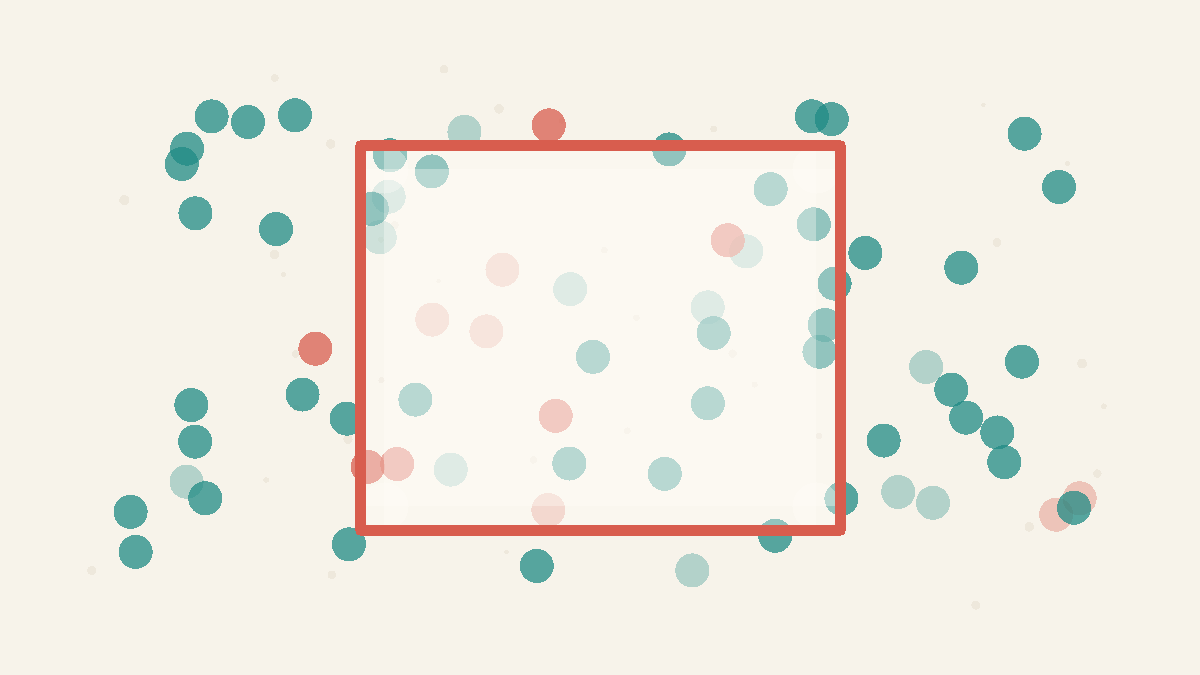
Bias is a steady pull in one direction — the summary gets dragged away from the truth no matter how much data piles up.
Example
Estimating a city's income by surveying people in the financial district at noon is biased upward — and no fixes who you are asking.
How It Works
A bathroom scale that reads 2 kg heavy is biased: every weigh-in misses the same way, and averaging a hundred weigh-ins just gives you a very precise wrong number. Statistical bias works like that scale — surveys that only reach certain people, studies that only publish exciting results, samples that only include survivors. Unlike random noise, bias does not cancel out with more data; the fix is changing how the data is collected, not collecting more of it.
Concepts
Sampling Bias
A distorted result caused by looking at data that does not represent the population you care about. More data does not fix the problem if the same kinds of cases are still missing. Before trusting a conclusion, ask who had a chance to appear in the sample and who was left out.
Publication Bias
Publication bias happens when studies with exciting or statistically significant results are more likely to be published, shared, or noticed than studies with null results. The visible literature can then exaggerate how strong an effect really is.
Related Facts
Data Tricks
4 min · easy

The missing planes mattered most
If you reinforce only the bullet holes on returning planes, you may protect the wrong places.
Data Tricks
4 min · medium
Publication bias hides the studies that found nothing
If only exciting results get published, the visible research record can make an effect look cleaner and stronger than it really is.