Fact
Goodhart's law: when a number becomes a target, it starts to lie
A metric can be useful until people are rewarded for moving it. Then the number may improve while the real goal gets worse.
Goodhart's law explains why dashboards, rankings, and quotas can backfire when a proxy metric becomes the thing people optimize directly.
By the Math Says Yes editorial team
Human-reviewed under our source and correction standards.
How we review content
THE TRAP
Assuming that improving the metric must mean improving the underlying goal the metric was chosen to represent.
The law in one line
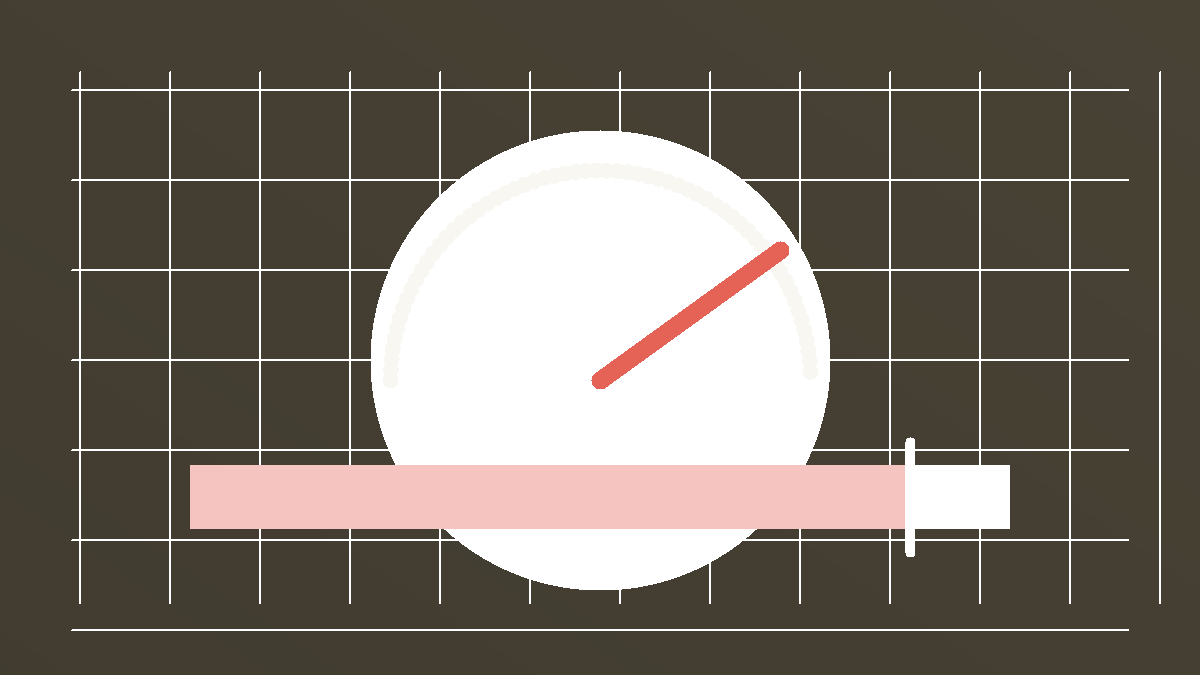
Goodhart's law is usually summarized as: when a measure becomes a target, it ceases to be a good measure. Measurement itself is not the villain here. A measurement is usually a proxy for something deeper, and once rewards or punishments attach to the proxy, people optimize the proxy — which can break its connection to the deeper goal.
What the Numbers Show
week 1
target set
week 8
tickets closed (the target)
problems actually solved
After tickets closed becomes the target, closures rise while user problems solved fall. The metric wins; the goal loses.
The everyday version
If support agents are judged only by tickets closed, easy tickets may crowd out important ones. If schools are judged only by test scores, teaching may narrow to the tested material. If hospitals are judged only by length of stay, discharging patients sooner can look like efficiency while increasing risk. The metric improves, but the user's experience, learning, or health may not.
Why intuition fails
A number feels objective. It appears on a dashboard, moves up or down, and gives managers something concrete to compare. That concreteness makes it easy to forget what the number leaves out. People are not passive measurement objects; they respond to being measured. The moment the metric becomes valuable, it becomes part of the system it was supposed to observe.
How to use it
Use metrics in pairs and systems. A speed target needs a quality counter-metric. A productivity target needs customer or safety checks. A ranking needs periodic review of individual cases. If the number improves while the lived outcome does not, the metric has drifted from the goal. Goodhart's law is a reminder to measure reality, then keep checking whether the measure still points to reality. Dashboards need humility.
Worked example
Suppose a software team is judged by the number of tickets closed per week. At first, the metric may roughly track productivity. Once it becomes the target, the team can split work into smaller tickets, avoid ambiguous bugs, or close issues before users are satisfied. The number rises, but the original goal, better software for users, may stay flat or get worse.
When it applies
Goodhart's law matters most when a proxy metric is tied to rewards, punishment, ranking, funding, or public reputation. It is weaker when the metric is private, hard to game, regularly audited, and paired with balancing measures. Stopping measurement is not the answer. Keep the goal visible, rotate or review metrics, and inspect cases where the number improves but the lived outcome does not.
What people get wrong
A metric does not stay neutral once people are judged by it. A number can be a useful signal while it is only observed. Once bonuses, rankings, or punishments depend on it, the number becomes part of the incentive system and may stop representing the original goal.
Source note
Strathern's European Review article is used because it is a stable academic source for the common formulation that a measure can stop being a good measure when it becomes a target. The page uses that formulation for practical dashboards and incentives, while keeping the broader lesson focused on proxy metrics and behavioral response.
FAQ
What is Goodhart's law?
It is the idea that a measure tends to stop being a good measure when it becomes a target, because people adapt their behavior to improve the number.
How do you avoid Goodhart's law?
You cannot avoid it completely, but you can reduce it by using balancing metrics, reviewing real cases, changing incentives when gaming appears, and keeping the underlying goal explicit.
Quick Check
Why can a useful metric become worse after it becomes a target?
A
People optimize the number itself, not the goal behind it.
B
Targets make people stop caring entirely.
C
Metrics can never summarize anything useful.
Sources
'Improving ratings': audit in the British University system
Primary source
European Review · Accessed 2026-06-20
Goodhart's law
Secondary explainer
Wikipedia · Accessed 2026-06-16
Know someone who'd like this?
Read next

A chart can mislead without a single false number
Start a bar chart's axis at 95 instead of 0 and a two-point change can look like a landslide.
Concepts
Framing Effects
The same true numbers can give very different impressions depending on how they are presented: axis ranges, baselines, absolute versus relative, or wording. Framing changes perception without changing the facts, so check how a number is shown, not just what it is.
Goodhart's Law
Goodhart's law says that when a measure becomes a target, it tends to stop being a good measure. People optimize what is rewarded, so the metric can improve while the thing it was meant to represent gets worse.