Lesson
Collisions Grow Faster Than Intuition
The number of possible pairs grows roughly with the square of the group size.
By the Math Says Yes editorial team
Human-reviewed under our source and correction standards.
How we review content
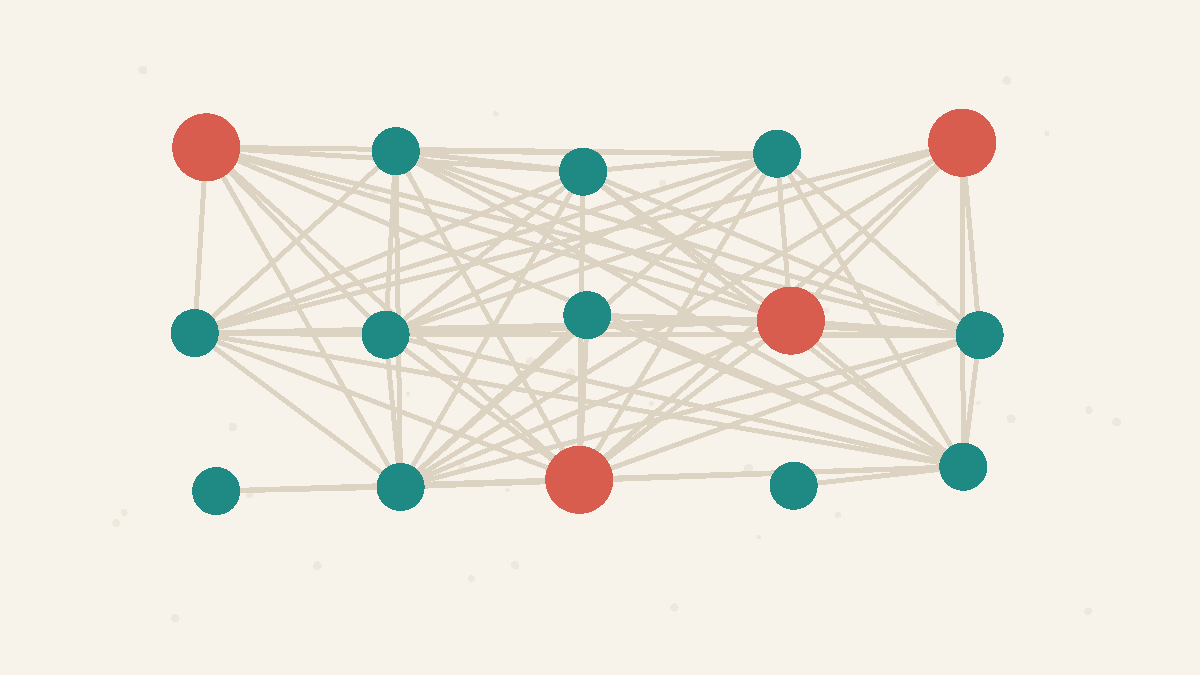
Count pairs, not people
Collision problems are easy to underestimate because the visible count is the number of people, while the real count is the number of possible relationships between them. Ten people do not create ten birthday comparisons. They create 45 pairs. Twenty-three people create 253 pairs. Each pair is another opportunity for a match, so the of seeing at least one shared birthday rises much faster than the headcount suggests.
Why the birthday result feels wrong
Most people picture one person comparing their birthday with everyone else, which is only one slice of the room. The surprise appears because every person is also being compared with every other person. You are not asking whether someone matches you. You are asking whether any two people match each other. That switch from one reference point to all pairwise comparisons is the whole lesson.
Where collisions show up
The same pattern appears outside birthdays. Password hashes, license plates, file names, usernames, random IDs, and lottery-style draws all become more collision-prone as the number of entries grows. A system can look spacious when you compare one new item with the full range, but crowded when you compare every item with every other item. That is why duplicate detection matters even when individual look tiny.
The practical check
When a coincidence looks unbelievable, pause before calling it meaningful. Ask how many chances the world had to produce it. Count the comparisons, searches, attempts, or pairs that were available before the event caught your attention. If that hidden opportunity count is large, the coincidence may be ordinary. The useful question is not only how rare one exact match is, but how many chances there were for any match.
FAQ
Why is the birthday paradox not really a paradox?
It only feels paradoxical because we count people instead of pairs. Once you count every possible pair in the room, the 50 percent result at 23 people is much less mysterious.
What question should I ask when a coincidence feels impossible?
Ask how many opportunities existed for a similar coincidence to happen. A rare event can become likely when there are hundreds, thousands, or millions of hidden chances.
See it in action
Try the idea
Birthday room
Add one person and watch their new comparisons fan out.
With 23 people in a room, how many different pairs are possible?
Choose an answer, then build the room and watch the pairs multiply.
Quick Check
Why does the birthday paradox become likely with only 23 people?
A
Because 23 is close to 365 divided by 12.
B
Because there are 253 possible pairs to compare.
C
Because birthdays are mostly in one month.