Lesson
Extremes Drift Back to Average
Record-setting and rock-bottom results usually move toward the average next time, with no cause behind it.
By the Math Says Yes editorial team
Human-reviewed under our source and correction standards.
How we review content
The core idea
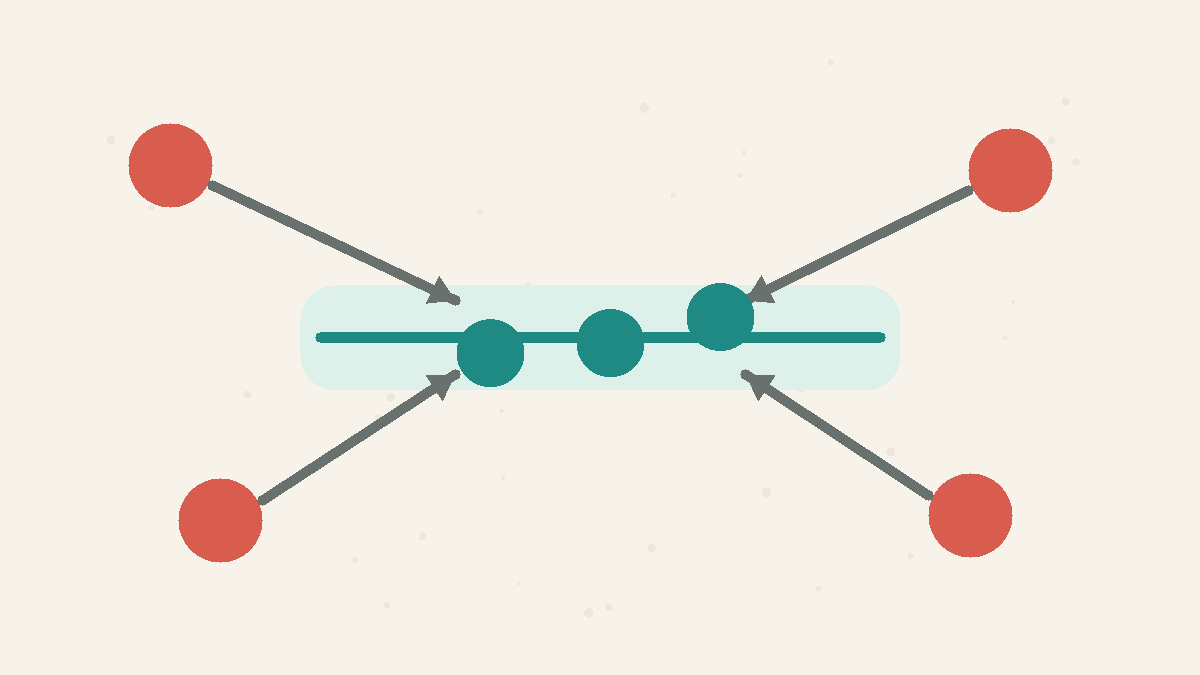
Almost every number you measure is two things added together: a stable part that reflects real underlying skill or condition, and a one-off part that reflects luck, mood, weather, or measurement noise. An extreme reading is extreme partly because both parts happened to point the same way at once. The stable part will still be there next time, but the lucky push usually will not repeat, so the second reading lands closer to the . Nothing changed about the thing itself.
Selecting on luck
The trap springs when you choose the top or the bottom of a single measurement. Pick the highest scores and you select two groups at once: the most skilled, and the people who were having an unusually good day. That second group will tend to come back to earth, which drags the selected toward the middle. The same happens in reverse at the bottom: the worst results include people who were unusually unlucky, and many of them rebound. Selection on an extreme is selection on luck.
The control-group fix
Because the selected group will drift toward the even if you do nothing, any change you measure afterward is partly just that drift. To tell a real effect from , you need a that you did not select on the same extreme. If both groups start equally extreme and only one gets the treatment, the difference between them at the end isolates the effect. Without that comparison, you cannot separate what your intervention did from what the average was always going to pull back.
Everyday traps
hides inside many familiar stories. The sophomore slump describes rookies who shone in year one and looked worse in year two, when their first season was partly luck. Speed cameras are often installed right after a road's worst year for crashes, so the later improvement gets credited to the camera even though a bad year is usually followed by a calmer one anyway. The phrase this remedy cured my cold works because people reach for remedies when symptoms peak, and symptoms tend to ease from a peak on their own.
FAQ
Is regression to the mean the same as the gambler's fallacy?
No. The gambler's fallacy wrongly expects past results to balance out, as if a coin owes you tails after several heads. Regression to the mean is real and applies to a fresh measurement of the same thing: an extreme reading was partly luck, and the next reading drifts back because that luck rarely repeats.
Does it mean skill isn't real?
No. The stable, skill-based part of a result persists from one measurement to the next, which is exactly why the best stay above average even after they drift. Only the lucky extreme fades. Regression trims the exaggeration in a single standout reading, not the underlying ability behind it.
Try the idea
Regression to the mean
Pick the top performers, then run the round again.
79
top 10 · round 1
70
top 10 · round 2
luck in the score: 60%
The top group almost always scores lower the second time. Nobody got worse — the lucky part of their first score just didn't repeat.
Quick Check
A clinic treats its sickest patients and most improve. Why is that weak evidence the treatment works?
A
Sick patients always recover on their own eventually.
B
Many were at an unlucky low point and would improve anyway.
C
The treatment must have worked because they improved.