Lesson
New Information Changes the Odds
Conditional probability is about updating the sample space after you learn something.
By the Math Says Yes editorial team
Human-reviewed under our source and correction standards.
How we review content
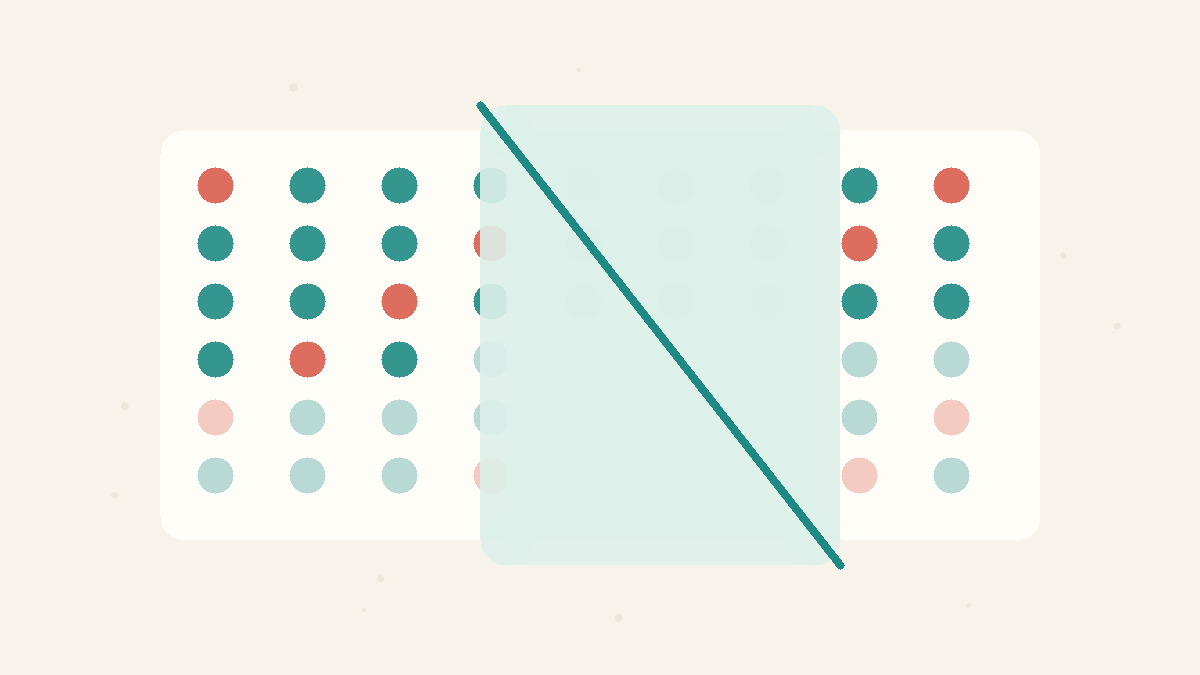
Update the world you are counting
Conditional begins when new information removes some possibilities and leaves others. The mistake is to keep counting the old space after the situation has changed. If you learn that a door was opened, a test came back positive, or a customer clicked a specific result, the next calculation must use only cases compatible with that information. The denominator has changed, so the have changed too.
Monty Hall as a clean example
In Monty Hall, your first choice has a one-in-three of hiding the prize. The other two doors together have a two-in-three chance. When the host opens one losing door, that two-in-three probability does not disappear. It concentrates on the only unopened door you did not choose, because the host used knowledge to avoid revealing the prize. Switching works because the host's action is informative.
Why evidence can mislead
Evidence is not just a label saying positive, negative, opened, or closed. It also has a process behind it. A medical test has false positives and false negatives. A search result has ranking rules. A host has constraints. Conditional thinking asks how often you would see the same evidence in each possible world. Only then can you compare which world remains more plausible after the information arrives.
Use a before-and-after table
A reliable habit is to write a small table of possibilities before the information and cross out the cases that no longer fit. Then compare the remaining cases, not the original list. This works for games, diagnostics, recommendations, fraud flags, and forecasts. If the information was produced by a biased or rule-based process, include that process in the table instead of treating the update as random background noise.
FAQ
What is the main idea of conditional probability?
It is the probability of an outcome after you restrict attention to cases where some condition is already true. You update both the numerator and the denominator.
Why does switching doors work in Monty Hall?
The host's opened door is chosen with knowledge, not at random. That action transfers the two-door probability from your unchosen side onto the only remaining closed door.
See it in action
Try the idea
Play Monty Hall
Three doors, one prize. Beat the host if you can.
You pick a door, then the host opens a losing one. Will switching doors help you?
Pick a door — one of the three hides the prize.
Quick Check
In the classic Monty Hall problem, what should you do after the host opens a losing door?
A
It does not matter.
B
Switch doors.
C
Stay with your first choice.