Lesson
The First Number Anchors
An arbitrary starting number drags every estimate toward it.
By the Math Says Yes editorial team
Human-reviewed under our source and correction standards.
How we review content
The first number sets a reference point
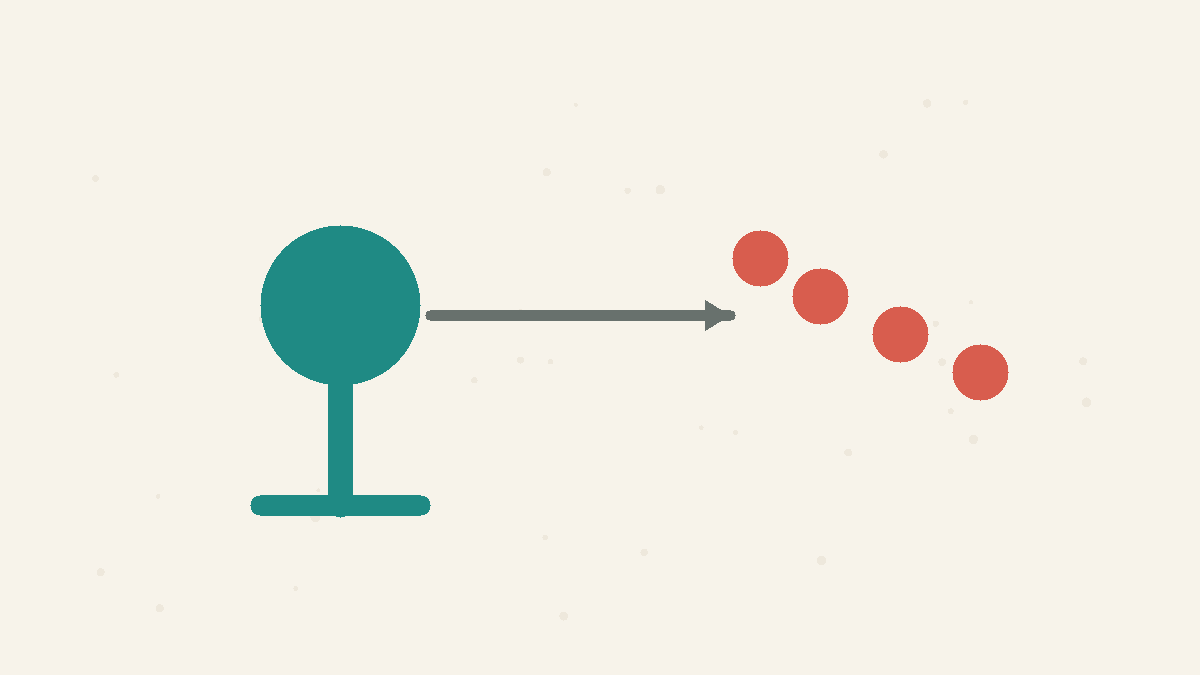
Anchoring happens when an initial number pulls later judgments toward it. The number can be a list price, opening offer, suggested donation, previous forecast, arbitrary wheel spin, or value shown in a question. Once the anchor is present, people adjust away from it, but usually not far enough. The final estimate feels self-generated, yet it remains partly shaped by the first number that entered the conversation.
Why irrelevant anchors still work
Anchors work because uncertainty makes the mind search for a starting point. Even a random number can become that starting point if it appears at the right moment. People know the number is irrelevant, but the adjustment process remains biased. In negotiation, pricing, planning, and forecasting, the first visible figure narrows the range of what feels plausible before the evidence has been fully considered.
Anchors shape decisions, not just estimates
Anchoring is not limited to trivia questions. A high retail price can make a discount look generous. A low salary offer can pull a negotiation downward. A first deadline can frame every later project estimate. A previous metric target can define success even after conditions change. Whenever a number arrives before independent analysis, it can become the center of gravity for decisions that follow.
Break the pull deliberately
The best defense is to generate an estimate before seeing other numbers, or to build one from independent reference points afterward. Ask what you would think if the anchor had never appeared. Look for outside comparisons, base rates, historical ranges, and bottom-up calculations. In groups, collect private estimates before discussion. The goal is not to ignore all anchors, but to stop accidental anchors from doing hidden work.
FAQ
Why does anchoring work even when the number is random?
Under uncertainty, the mind uses available numbers as starting points. Even when people know the number is random, their adjustment away from it is often too small.
How can I reduce anchoring in decisions?
Make an independent estimate first, then compare with outside reference classes, historical ranges, and bottom-up calculations before accepting the first visible number.
Quick Check
People shown a high random number before estimating a quantity tend to give answers that are…
A
Completely random
B
Unchanged — they ignore it
C
Lower, to compensate
D
Higher, pulled toward the number