Fact
Berkson's paradox: hospitals can create fake correlations
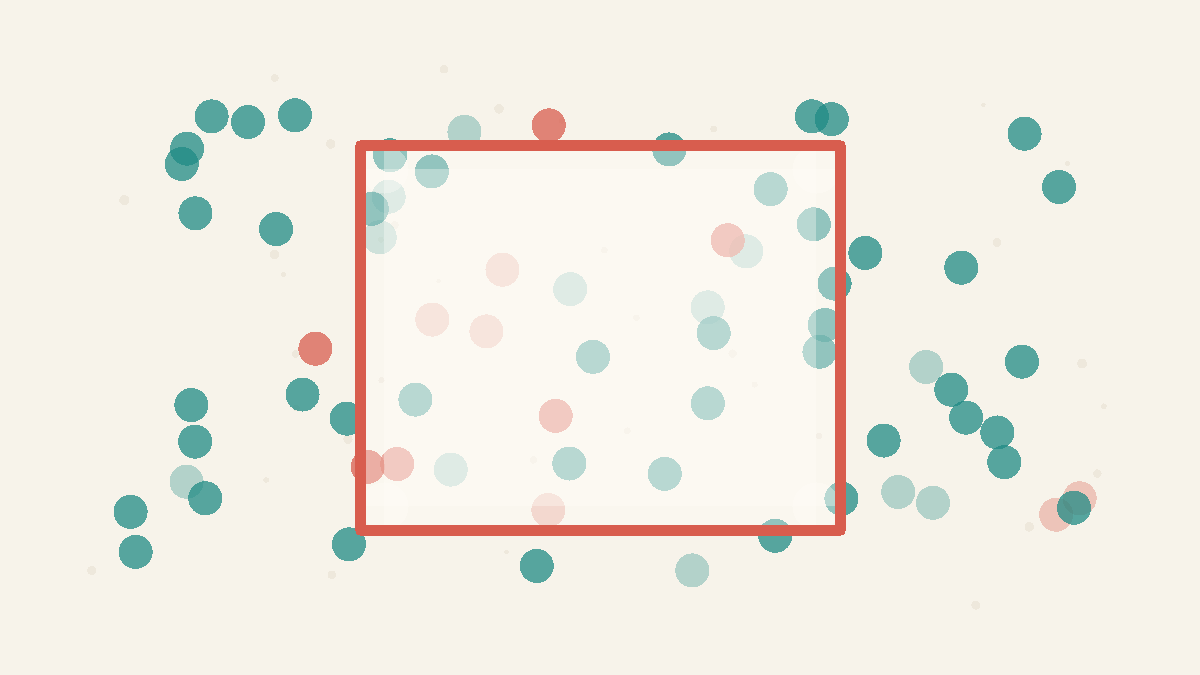
Two unrelated risk factors can look negatively related inside a hospital, because either one can be the reason a patient got selected into the sample.
Berkson's paradox is collider bias in action: conditioning on being selected can create relationships that are not present in the full population.
By the Math Says Yes editorial team
Human-reviewed under our source and correction standards.
How we review content
THE TRAP
Forgetting that the sample was selected by an outcome affected by both variables, so relationships inside the selected group can be artificial.
The selection trap
A hospital contains people who got admitted, not everyone in the — Berkson's paradox starts with a selected sample like that. If two different conditions can each increase the of admission, then admission is a shared consequence of those conditions. Looking only at admitted patients means you have conditioned on that shared consequence, and conditioning can change the relationships among its causes.
What the Numbers Show
10%
everyone
10%
hospital: diabetic
36%
hospital: no diabetes
Illustrative: both groups have 10% gallbladder disease outside; hospital selection raises the non-diabetic inpatient rate to 36%.
Why a fake relationship appears
Suppose condition A and condition B are unrelated in the general , but either one can bring someone to the hospital. Inside the hospital, a patient who has A already has a reason to be there, so they may be less likely to also need B as the reason they were selected. The can therefore show a negative association even when the population has no association.
Where it shows up
The same pattern appears outside medicine. Among admitted students, test scores and unusual extracurricular talent may look negatively related because either strength can help someone get admitted. Among successful creators, networking and technical skill can look like substitutes because either can help pass the success filter. Whenever you study only the people who passed a gate, the gate can create relationships that were not there before.
How to use it
Before trusting a relationship inside a selected group, ask how people entered the group. Did the variables being compared influence selection? If so, the association may be a selection artifact. The cleanest fix is to analyze the broader or explicitly model the selection process. At minimum, avoid making population claims from a created by the outcome you are trying to explain.
Worked example
Think about a selective art school that admits applicants for either exceptional drawing skill or exceptional design theory. Among admitted students, the best drawing students may look weaker at theory on , because drawing alone was enough to get many of them admitted. That negative relationship need not exist among all applicants. It can be created by looking only at people who passed a gate that either trait could open.
When it applies
Look for Berkson's paradox whenever the dataset is built from admitted, diagnosed, successful, hired, approved, or otherwise filtered cases. The warning is strongest when the variables being compared also helped determine entry into the dataset. It is weaker when selection is random or independent of the variables. The practical question is simple: did the door into the depend on the things you are now comparing?
What people get wrong
The mistake is forgetting that the has already passed a gate. Inside a hospital, elite school, shortlist, or successful-founder dataset, the entry rule has changed the mix of cases. Relationships inside that selected group may describe the gate as much as they describe the underlying .
Source note
Berkson's 1946 paper is the primary source for the hospital-data warning. It supports the page's central claim that relationships observed inside a selected clinical can differ from relationships in the broader . The page extends the same selection logic to schools, hiring, creators, and other filtered datasets.
FAQ
What is Berkson's paradox in simple terms?
It is a false association that appears after you look only at selected cases, such as hospital patients, when selection depends on either of the variables being compared.
Is Berkson's paradox a kind of sampling bias?
Yes. More specifically, it is collider bias: conditioning on a shared consequence can create an artificial relationship between otherwise unrelated causes.
Quick Check
Why can two unrelated traits look related inside a hospital sample?
A
Hospitals remove all sampling bias.
B
Every hospital patient has the same risk factors.
C
Admission can depend on either trait, linking them in the sample.
Sources
Berkson's paradox
Secondary explainer
Wikipedia · Accessed 2026-06-16
Limitations of the application of fourfold table analysis to hospital data
Primary source
Biometrics Bulletin · Accessed 2026-06-20
Know someone who'd like this?
Read next
Why your friends seem more popular
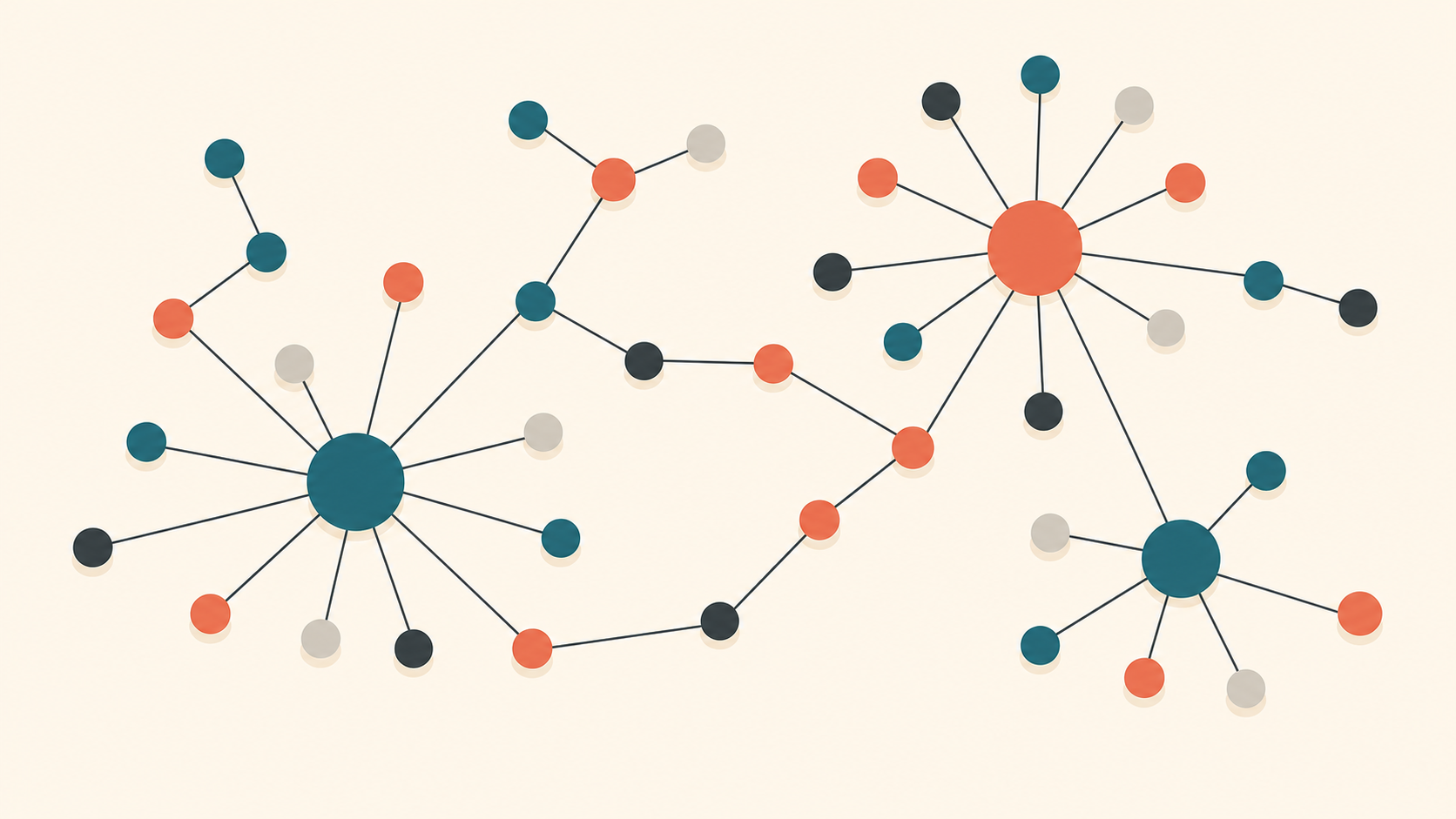
Pool every name occurrence from every friend list and well-connected people appear more often. The resulting average is never below the uniformly random-person average, and is higher when friend counts vary.
Concepts
Collider Bias
Collider bias appears when you only look at cases selected by a shared outcome, such as hospital patients or admitted applicants. Conditioning on that shared outcome can create a relationship between causes that were not related in the full population.
Sampling Bias
A distorted result caused by looking at data that does not represent the population you care about. More data does not fix the problem if the same kinds of cases are still missing. Before trusting a conclusion, ask who had a chance to appear in the sample and who was left out.