Fact
A fairground crowd guessed an ox's weight almost perfectly
At a 1906 country fair, the median of hundreds of independent guesses of an ox's weight came within about 1% of the truth — beating almost every individual guesser.
The wisdom of the crowd: in Galton's famous ox-weighing example, the median of many independent guesses landed within about 1% of the real weight, because independent high and low errors partly cancel when estimates are combined.
By the Math Says Yes editorial team
Human-reviewed under our source and correction standards.
How we review content
THE TRAP
We trust one confident expert over a bunch of random people, and miss that those random people's errors point in different directions. Combined carefully, independent over- and under-estimates can cancel, so the crowd often beats the expert.
Private guesses can spread widely while the group's middle stays close to the real weight.
What happened
At a 1906 country fair, Francis Galton gathered the guesses that fair-goers had written down for a weight-judging contest: each tried to estimate the weight of a dressed ox. About 787 usable guesses came in. The individual estimates were all over the place, with plenty far too high and plenty far too low. Yet when Galton used the as the crowd's single aggregate, the figure landed astonishingly close to reality: around 1,207 lb against an actual weight of about 1,198 lb. The median guess was within roughly one percent, and it beat almost every single person in the crowd.
What the Numbers Show
crowd's median guess
1,207 lb
the ox's actual weight
1,198 lb
Galton reported a 1,207 lb median from about 787 guesses; the ox weighed 1,198 lb.
Source: Vox Populi
Why it works
Each guess is the true weight plus a personal error, and that error points high or low more or less at random. Because the guessers were not coordinating, their errors did not share a direction: some overshot, some undershot, and no particular tied them together. When you combine many such guesses with a or a , the true weight stays put because it sits inside every guess, while the scattered errors partly cancel one another out. What is left is mostly the shared signal. That is why the aggregate can be far more accurate than the typical individual: the crowd is not smarter, its mistakes simply offset.
The conditions
The wisdom of the crowd is not automatic; it needs three things. The guesses should be diverse, so different people bring different information and biases. They should be independent, so each person decides alone rather than echoing a neighbour. And they should be roughly unbiased on , so the errors are scattered around the truth rather than all leaning the same way. Galton's fair satisfied these conditions well: people wrote private guesses without conferring. Remove any one condition and the magic fades. Herd influence, in particular, makes everyone's error lean the same direction, and shared leanings do not cancel.
Why intuition fails
Our instinct is to find the one expert and trust them, treating a crowd of amateurs as noise to be ignored. A confident specialist feels far more reliable than a pile of guesses from people who admit they are unsure. But that intuition counts the wrong thing. A single expert still carries a single error, and you have no way to cancel it. A large crowd carries many errors that mostly cancel, leaving an estimate that can be steadier than the expert's. The crowd looks foolish guess by guess and turns out wise in aggregate.
How to use it
To borrow the crowd's accuracy, collect independent estimates before people hear each other, then combine them with a simple rule such as a or . Ask each person, team, or model for a number on its own, in private, so no one anchors on the first voice or the loudest opinion. Only after the guesses are locked in should you combine them and talk it through. Protect first, then combine: the result can be more accurate than a typical individual estimate, though no crowd is automatically right.
Worked example
Here is a toy version with five guesses of the same 1,200 lb ox: 1,000, 1,120, 1,210, 1,320, and 1,500 lb. Every guess is wrong, and two miss by 200 lb or more. But the errors point both ways, so the (1,210 lb) misses by only 10 lb, and even the (1,230 lb) misses by just 30. Nobody in this crowd needs to be right for its middle to be close: the low misses and the high misses do the canceling.
What people get wrong
No crowd is automatically wise. A crowd can amplify if people copy one another, share the same bad information, face the same incentive, or are selected from the same narrow group. Diversity and are not decorative details; they are part of why the can work.
When it applies
Crowd estimates are strongest for questions where many people have partial information and errors are at least partly independent: weights, forecasts, rankings, demand estimates, or calibration tasks. They are weaker for moral questions, expert-only domains, manipulated polls, or situations where social influence makes everyone move together.
Source note
Galton's Vox Populi is the primary source for the classic crowd-estimation example. The page keeps the lesson conditional: aggregate judgment can be powerful, but only when the crowd's errors are not all pushed in the same direction.
Try It
Find the crowd's middle guess
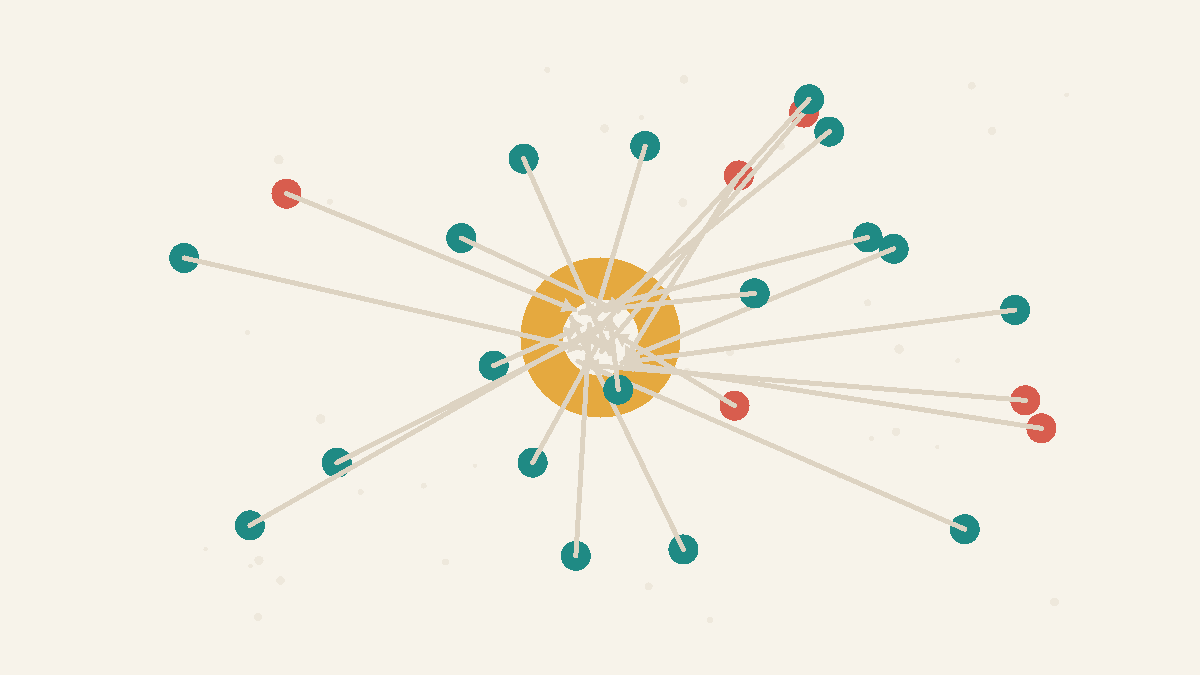
Each dot is one private guess. Coral marks the middle; teal marks the ox's real weight.
750 lb
1,650 lb
private guess
middle guess
real weight · 1,198 lb
1188 lb
middle guess
10 lb
middle misses by
10 private guesses
one person misses by, on average: 224 lb
Some guesses are too high and others too low. With 10 private guesses, the middle is 10 lb from the ox.
Illustrative guesses, not Galton's original data.
FAQ
What was Galton's ox experiment?
At a 1906 country fair, Francis Galton collected about 787 written guesses of a dressed ox's weight. Their median estimate was about 1,207 lb against an actual weight near 1,198 lb, within roughly one percent of the truth.
When does the wisdom of the crowd fail?
It fails when the guesses are correlated or biased rather than independent. If people herd, copy one another, or all share the same misinformation, their errors line up instead of cancelling, so the aggregate inherits the common mistake.
Quick Check
Why did the crowd's middle guess land so close to the ox's real weight?
A
Private guesses missed both high and low.
B
Everyone copied the most confident guesser.
C
Most people already knew the exact weight.
Sources
Vox Populi
Primary source
Nature · Accessed 2026-06-16
Wisdom of the crowd
Secondary explainer
Wikipedia · Accessed 2026-06-15
Know someone who'd like this?
Read next
A random number can drag your guess
Spin a wheel to a random number, then ask people to estimate a fact — and those who saw a bigger number guess bigger, even when the number was obviously meaningless.