Fact
A "50% higher risk" can still be almost nothing
Headlines shout '50% more likely!' — but 50% more of a small risk is still a small risk.
A relative change hides the base rate; only the absolute numbers tell you whether to worry.
By the Math Says Yes editorial team
Human-reviewed under our source and correction standards.
How we review content
THE TRAP
A big percentage feels like a big danger, but a percentage is only as big as the risk it multiplies.

What this shows
A headline that says 50% higher risk tells you the multiplier but hides the starting point. The multiplier is ; the actual level is . If the baseline risk is 4 in 1,000, a 50% increase means 6 in 1,000. That is real, but it is not the same emotional object as hearing only 50% higher. You need both numbers to judge the size.
What the Numbers Show
0.4%
before
0.6%
after
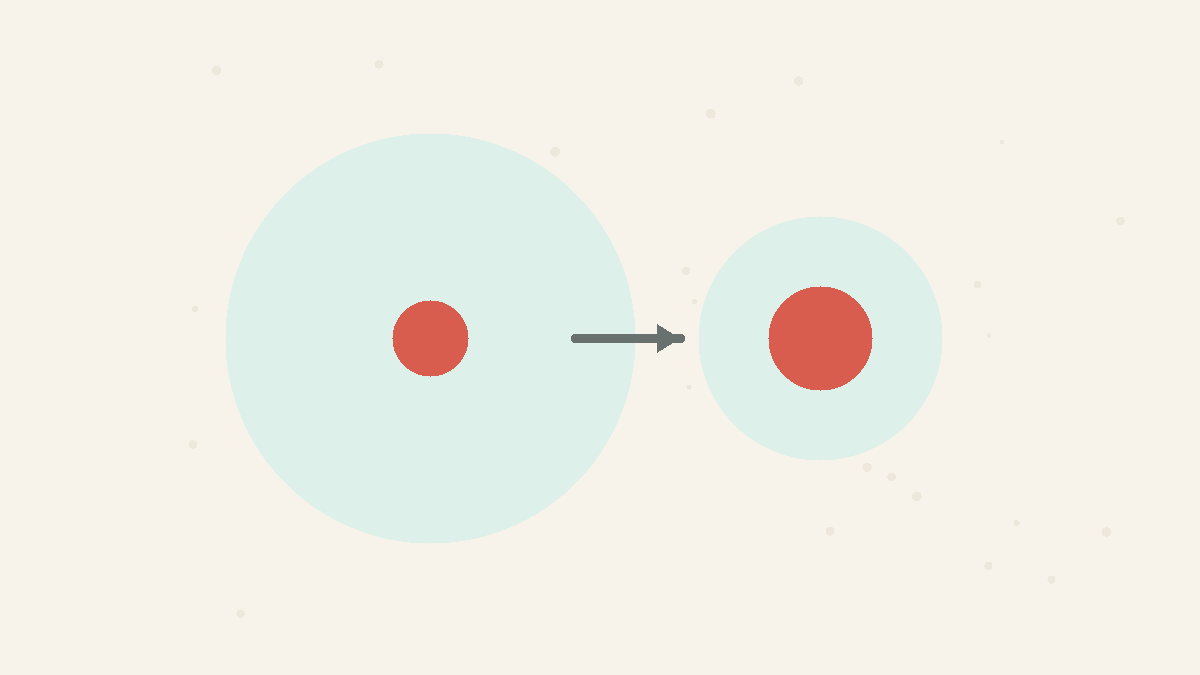
A scary "+50%" moved the risk from 0.4% to 0.6% here: an absolute increase of 0.2 percentage points.
Why intuition fails
Percent language is slippery because percent change and percentage points sound similar. A rise from 0.4% to 0.6% is a 50% , but only 0.2 percentage points of . A rise from 40% to 60% is also a 50% relative increase, but now the absolute increase is 20 percentage points. Same relative headline, very different practical size. That is why the cannot be optional.
Worked example
Suppose a risk rises from 2 in 10,000 to 3 in 10,000. The is 50%, because 3 is one and a half times 2 — that is the number the headline shouts. The is 1 extra case per 10,000 people. Both statements are mathematically true, but they answer different questions: the relative number describes how much the risk changed compared with where it started, and the absolute number describes how many additional people are affected.
How to use it
Translate risk claims into a small table: baseline risk, new risk, absolute difference, and relative change. Then convert the percentages into counts, such as people per 100, 1,000, or 10,000. The count format makes the tradeoff easier to see. For serious outcomes, a small absolute change can still matter, but at least you are judging the real size.
What people get wrong
A '50% higher risk' headline invites two opposite overreactions: panicking at the relative number alone, or dismissing the risk because the absolute number is small. Neither judgment is safe before you know the baseline and the absolute change — and for serious outcomes, severity, cost, reversibility, and who is affected still matter. Relative and are each incomplete alone; a trustworthy claim gives both, plus the time period and the .
When it applies
This pattern appears in medical benefits, side effects, crime trends, product failures, investment losses, and safety claims. It is especially important when the baseline risk is small. Ask for the original risk, the new risk, the time frame, and the denominator. Without those, a percentage change can produce emotion without decision-grade information.
Source note
Trevena and coauthors reviewed how evidence and risk information should be communicated to patients. Their findings back the page's practical rule: risk communication should include absolute numbers, not only relative framing.
Try It
Relative vs. absolute risk
Keep the group fixed at 100 people, then change how many are affected before a +50% increase.
People affected before
2 of 100 people
2
affected before, of 100
3
affected after +50%, of 100
The group stays fixed at 100 people. Starting with 2 affected, "+50%" means 3 affected — 1 extra person in the same 100. Relative risk describes the proportional change; absolute risk counts the extra people.
FAQ
What is relative risk?
Relative risk compares the new risk with the starting risk as a ratio. Going from 4 in 1,000 to 6 in 1,000 is a 50% relative increase because 6 is 1.5 times 4. The ratio is useful, but it does not show the starting level by itself.
What is absolute risk?
Absolute risk is the actual chance of the outcome, such as 4 in 1,000 or 6 in 1,000. The absolute change from 0.4% to 0.6% is 0.2 percentage points, or two extra people per 1,000.
What should a good headline include?
It should include the baseline and the new risk, not only the relative change. "Risk rose from 4 in 1,000 to 6 in 1,000" is much clearer than "risk rose by 50%" because it shows both the multiplier and the actual size.
Quick Check
A risk rises from 0.4% to 0.6%. What is the absolute increase?
A
0.2 percentage points
B
0.6 percentage points
C
50 percentage points
Sources
A systematic review on communicating with patients about evidence
Primary source
Journal of Evaluation in Clinical Practice · Accessed 2026-06-20
Relative risk reduction
Secondary explainer
Wikipedia · Accessed 2026-06-14
Know someone who'd like this?
Read next

Relative risk vs absolute risk: the difference that changes decisions
Relative risk tells you how many times bigger a risk became. Absolute risk tells you how many extra people are affected.