Glossary term
Odds Ratio
A comparison of two groups made by dividing the odds of an event in one group by the odds in the other.
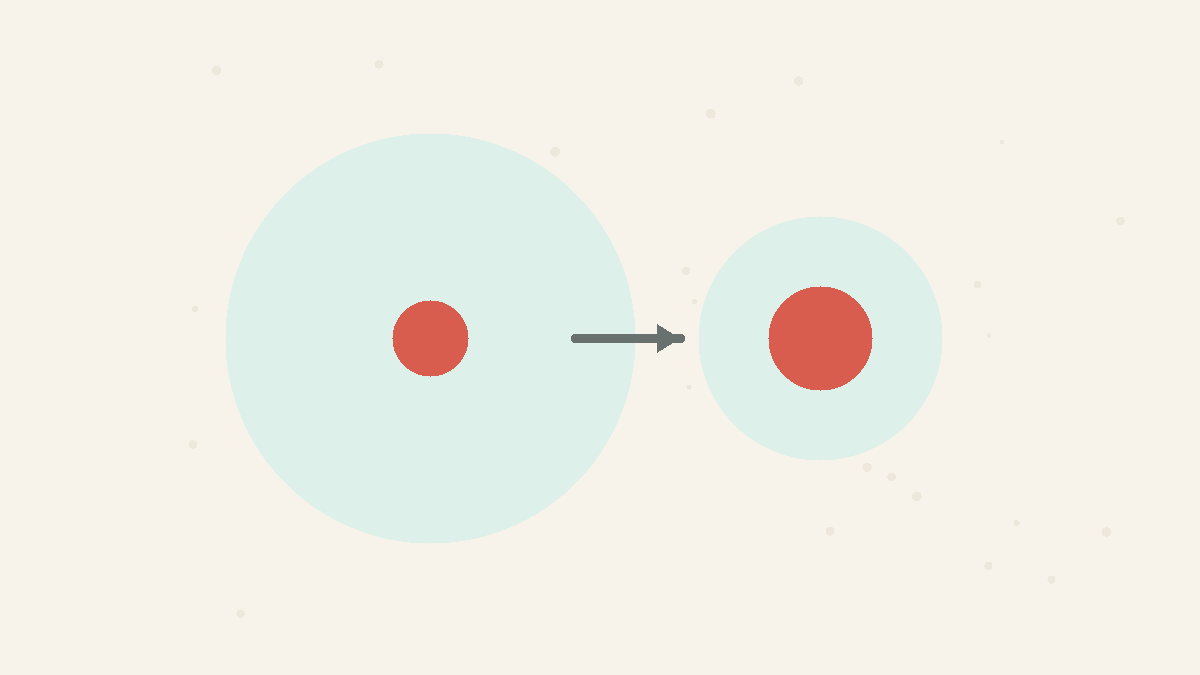
Visual intuition
before
2 cases
x2
after
4 cases
Odds ratio: 4-to-32 against 2-to-34, about 2.1
Cases rise from 2 to 4 in a group of 36. The x2 lens shows the risk ratio (4/36 versus 2/36). The odds ratio divides odds instead — 4 to 32 against 2 to 34, about 2.1 — nearly the same here because cases are rare (illustrative counts).
Formula
odds ratio = odds in group A / odds in group B
Example
If 50% of untreated patients recover ( 1 to 1) and 75% of treated patients do (odds 3 to 1), the odds ratio is 3 — even though the is only 1.5 (illustrative numbers).
How It Works
Take 36 people with 2 cases, and 36 with 4. The risks are 2/36 and 4/36, so the is 2.0. The are 2 to 34 and 4 to 32, so the odds ratio is (4/32) divided by (2/34) — about 2.1. When cases are rare, odds and risks nearly agree, which is why case-control studies — which by design can only estimate odds — still get reported as 'double the risk'. When the event is common, the odds ratio drifts away from the risk ratio and always looks more extreme: going from 50% to 75% recovery is a risk ratio of 1.5 but an odds ratio of 3.
Concepts
Absolute vs Relative Risk
A relative change ('50% more', 'doubles your risk') hides how big the underlying risk actually is. A large relative increase on a tiny base rate is still tiny. Always ask for the absolute numbers — how many in 100 before and after — not just the percentage change.
Comparing Risks
Putting different dangers on one common scale — like the micromort, a one-in-a-million chance of death — lets you compare activities honestly, instead of ranking them by how frightening they feel.