Glossary term
Risk Ratio
The risk of an event in one group divided by the risk in another — how many times more likely the event is.
Visual intuition
before
2 cases
x2
after
4 cases
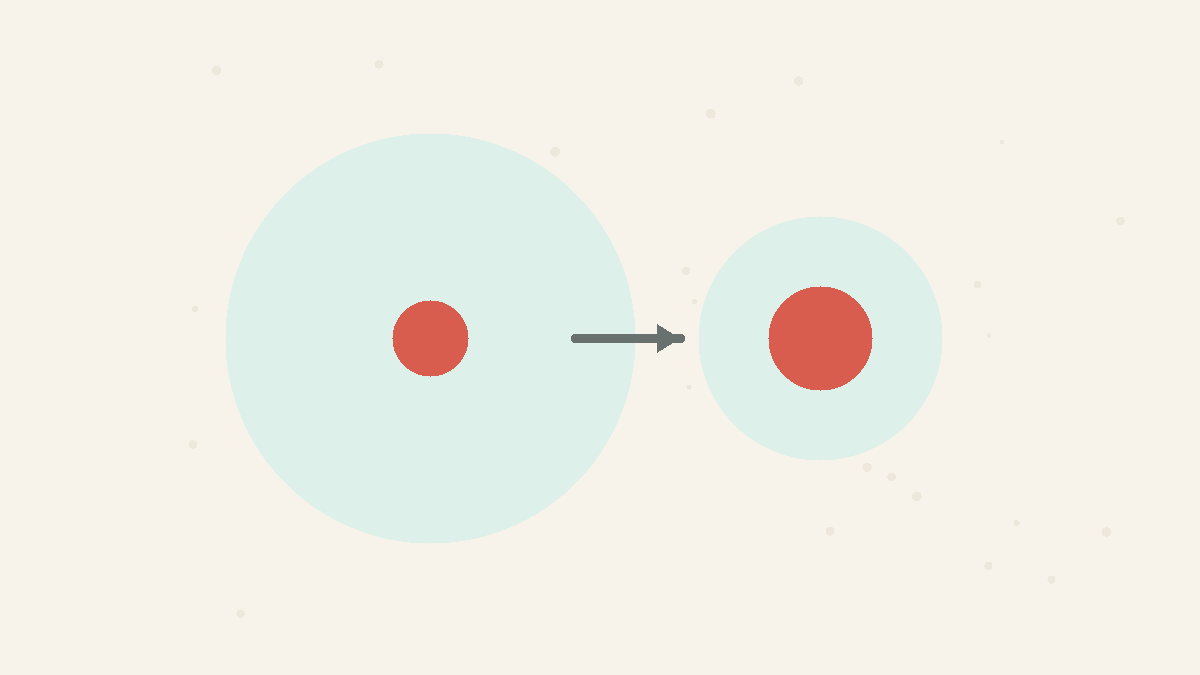
Risk ratio: 4 cases against 2 = x2
Cases go from 2 in 36 to 4 in 36 — the x2 lens is the risk ratio: the after-risk divided by the before-risk. Same picture, tiny absolute change: 2 extra cases (illustrative counts).
Formula
risk ratio = risk in group A / risk in group B
Example
If 2 in 10,000 unexposed people develop a condition and 4 in 10,000 exposed people do, the risk ratio is 2.0 — twice the risk, yet only 2 extra cases per 10,000 (illustrative numbers).
How It Works
Divide the share affected in one group by the share affected in the other: if 4 of 36 exposed people become cases against 2 of 36 unexposed, the risk ratio is (4/36) / (2/36) = 2.0 — 'twice the risk'. It is the plainest way to compare two risks, and the headline number behind most 'X doubles your risk' claims. Two cautions: it hides the baseline — doubling a 1-in-a-million risk is still almost nothing — and it is not the , which compares instead and looks more extreme for common events.
Concepts
Absolute vs Relative Risk
A relative change ('50% more', 'doubles your risk') hides how big the underlying risk actually is. A large relative increase on a tiny base rate is still tiny. Always ask for the absolute numbers — how many in 100 before and after — not just the percentage change.
Comparing Risks
Putting different dangers on one common scale — like the micromort, a one-in-a-million chance of death — lets you compare activities honestly, instead of ranking them by how frightening they feel.
Related Facts
Risk & Decisions
5 min · medium
Relative risk vs absolute risk: the difference that changes decisions
Relative risk tells you how many times bigger a risk became. Absolute risk tells you how many extra people are affected.
Risk & Decisions
4 min · medium
A "50% higher risk" can still be almost nothing
Headlines shout '50% more likely!' — but 50% more of a small risk is still a small risk.