Glossary term
Variance
A measure of spread: the average of the squared distances between each value and the mean.
Visual intuition
mean
Standard deviation is the looseness around the mean
Variance scores the same looseness around the mean, using squared gaps — standard deviation is its square root.
Formula
sum((value - mean)^2) / n
Example
For commutes of 20, 30, and 40 minutes the is 30 and the gaps are -10, 0, and 10, so the variance is (100 + 0 + 100) / 3 ≈ 66.7 — and the is about 8.2 minutes.
How It Works
Variance asks: how far do values typically sit from the ? It squares each gap before averaging, so big misses count extra and negative gaps cannot cancel positive ones. The squaring leaves awkward units (minutes squared, dollars squared), which is why its square root — the — is what usually gets reported.
Concepts
Standard Deviation
Standard deviation describes how spread out individual observations are around their mean. It is about variation in the data itself. Standard error is different: it describes how much an estimate such as the sample mean would vary across repeated samples.
Summary Statistics
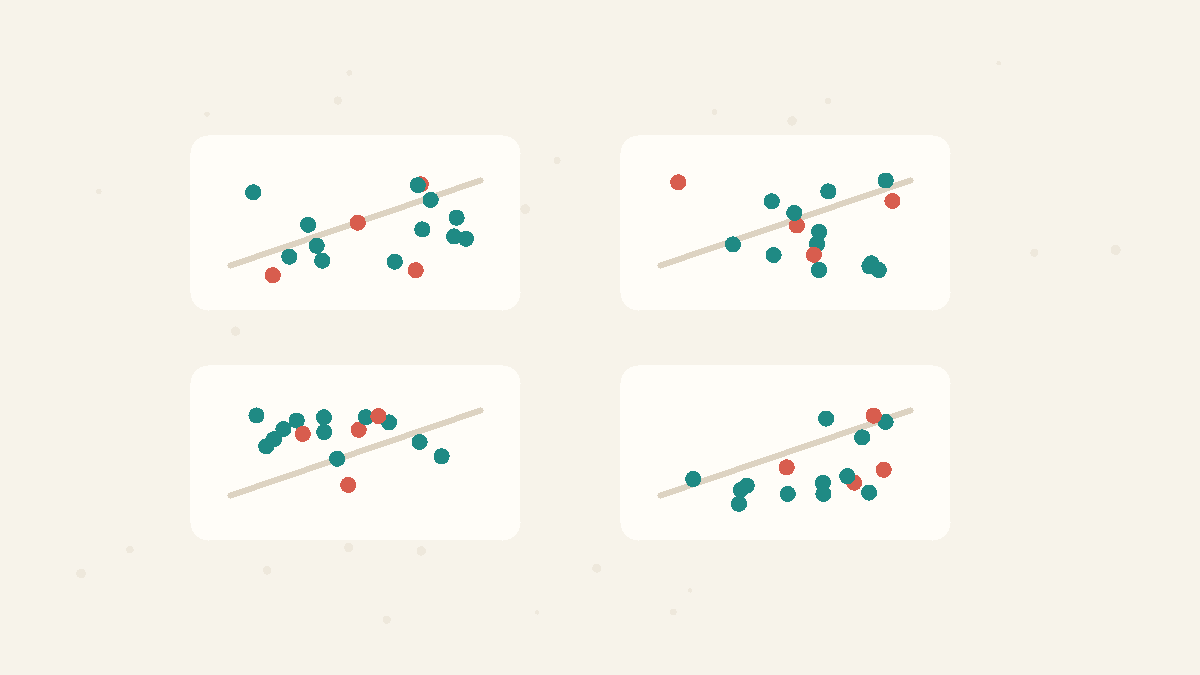
Summary statistics compress a dataset into numbers such as the mean, variance, correlation, or regression line. They are useful, but they can hide shape, outliers, clusters, and curved relationships that a graph would reveal immediately.
Related Facts
Data Tricks
5 min · easy
Standard error vs standard deviation: spread vs precision
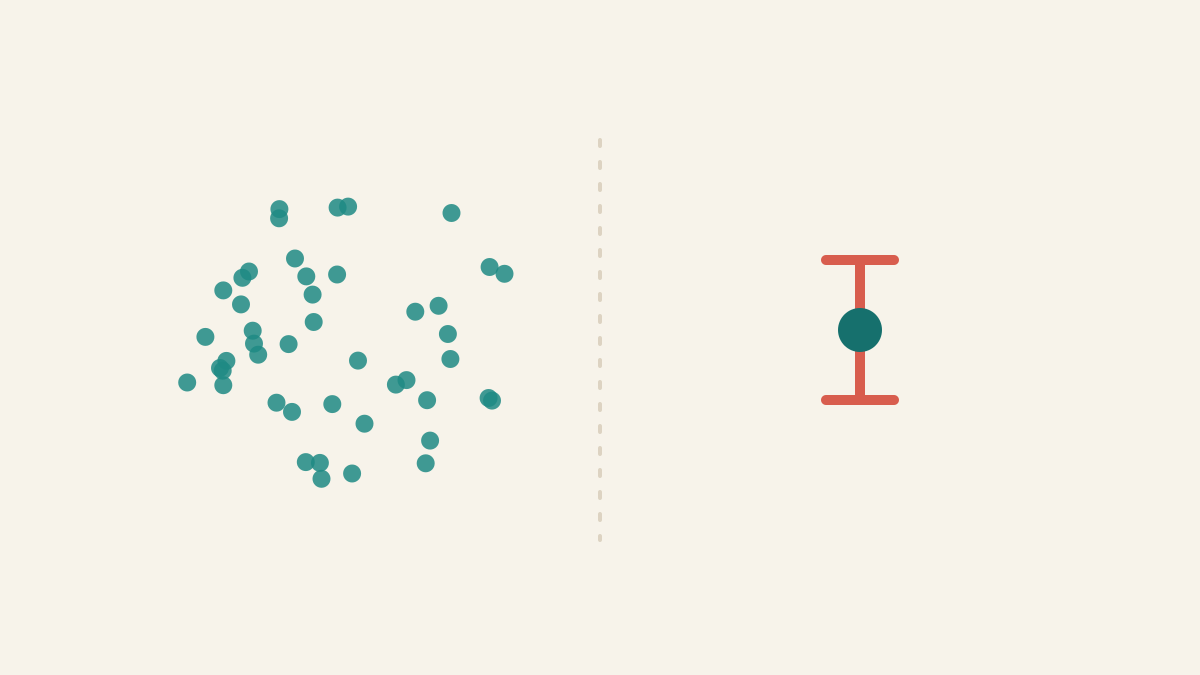
Standard deviation describes spread among individual values. Standard error describes uncertainty in an estimate such as the mean.
Data Tricks
4 min · easy
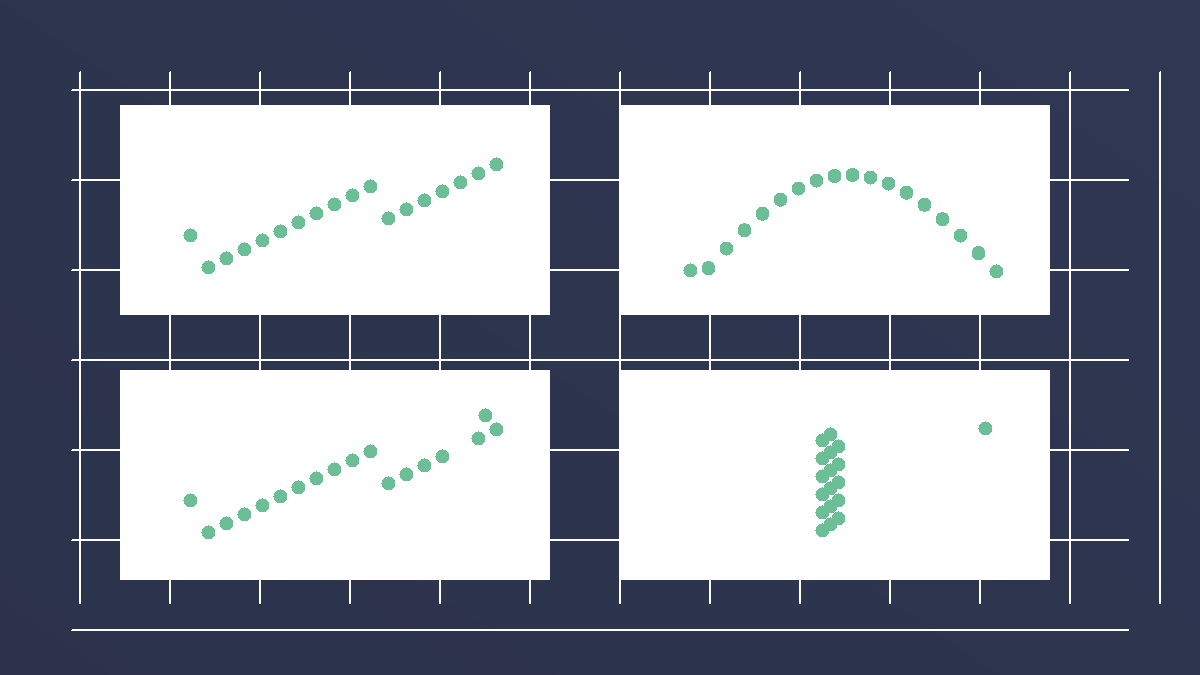
Anscombe's quartet has the same statistics and different stories
Four datasets can share almost the same mean, variance, correlation, and regression line, yet look completely different when plotted.