Fact
Correlation vs causation: why moving together is not proof
Correlation says two things move together. Causation says one changes the other. A hidden third factor can make correlation look causal.
Correlation is a pattern. Causation is a claim about mechanism. To move from one to the other, you need timing, a fair comparison, and alternative explanations ruled out.
By the Math Says Yes editorial team
Human-reviewed under our source and correction standards.
How we review content
THE TRAP
Seeing two lines move together and instantly choosing the neatest cause-and-effect story.

The short difference
means two variables tend to change together. Causation means changing one variable would change the other, all else held equal. The gap between those statements is large. A correlation can be a clue, but it does not identify direction, rule out shared causes, or prove what would happen under an intervention. Causation needs a comparison that makes the alternative explanations less plausible.
Quick Comparison
Correlation
Causation
What it answers
Do two variables tend to move together?
Would changing one variable change the other?
Common mistake
Reading a pattern as proof of a mechanism.
Claiming cause without timing, mechanism, or a fair comparison.
Use when
You need a clue, warning sign, or prediction.
You need an explanation or intervention decision.
What the Numbers Show
J
F
M
A
M
J
J
A
S
O
N
D
ice cream sales
drownings
over the year →
Illustrative seasonal pattern. The two lines move together because both follow summer heat, not because ice cream causes drowning.
Worked example
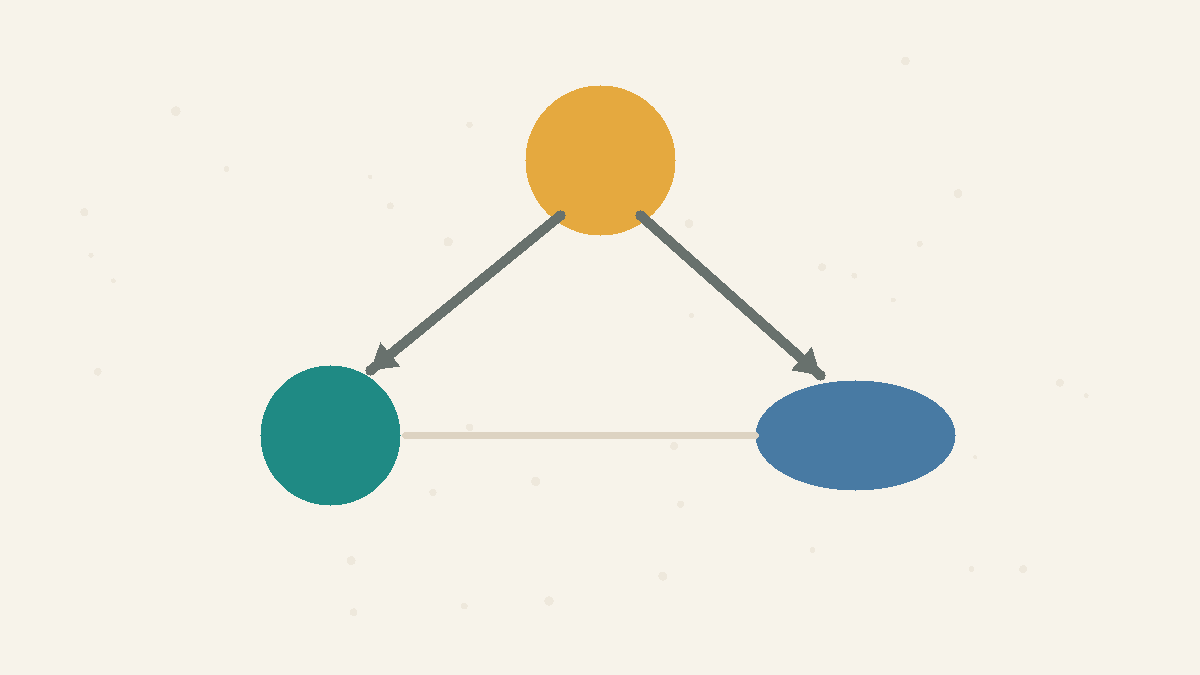
Ice cream sales and drownings can rise together across warm months. The simple is real in the stylized data: both lines climb in summer and fall in winter. But the causal story is not that ice cream causes drowning. Warm weather increases swimming and also increases ice cream buying. Temperature is a , a third factor that pushes both variables in the same direction.
What people get wrong
Most readers stop at the chart. A strong-looking or pair of matching trend lines can still be explained in several ways. Reverse causality is possible when the supposed effect actually influences the supposed cause. Confounding is possible when a moves both. Selection can also manufacture a relationship. The chart starts the investigation; it does not finish it.
When it applies
Use the warning whenever a headline says one thing raises, lowers, causes, prevents, or predicts another. Ask whether the cause came before the effect, whether comparable groups were used, and what third variables could move both measures. Randomized experiments answer these questions most cleanly. When experiments are not possible, careful causal inference tries to approximate a fair comparison.
Source note
Hernan and Robins provide the causal-inference framing: causal claims depend on comparisons that approximate what would have happened under alternative actions. Tyler Vigen's editorial catalogue of spurious correlations illustrates how visually persuasive non-causal relationships can look. The page uses ice cream and drowning as a teaching example, not as a live safety estimate.
Try It
Hidden confounder
Slide the temperature and watch both rise together.
Hidden common cause
20°C
temperature
360
ice cream sales
5
drownings
Ice cream ≠ cause of drownings
Temperature
20°C
The fork is the causal claim: temperature pushes both outcomes upward independently.
At 20°C, ice cream sales sit at 360 and drownings at 5 — both pushed up by the heat, not by each other. Slide toward cooler days and the two fall together; the ice cream never touched the water.
FAQ
Does correlation ever support causation?
Yes. Correlation can be useful evidence, especially with timing, mechanism, and a fair comparison. It just cannot prove causation by itself.
What is a confounder?
A confounder is a third factor that affects both variables being compared, making them move together even without a direct causal link.
Quick Check
Ice-cream sales and drownings rise together. What is needed before claiming that one causes the other?
A
An even stronger correlation
B
A fair comparison that rules out heat and other confounders
C
Matching units on both axes
Sources
Causal Inference: What If
Authoritative source
Harvard T.H. Chan School of Public Health · Accessed 2026-06-20
Spurious Correlations
Editorial example
Tyler Vigen · Accessed 2026-06-14
Know someone who'd like this?
Read next
Does ice cream cause drownings?
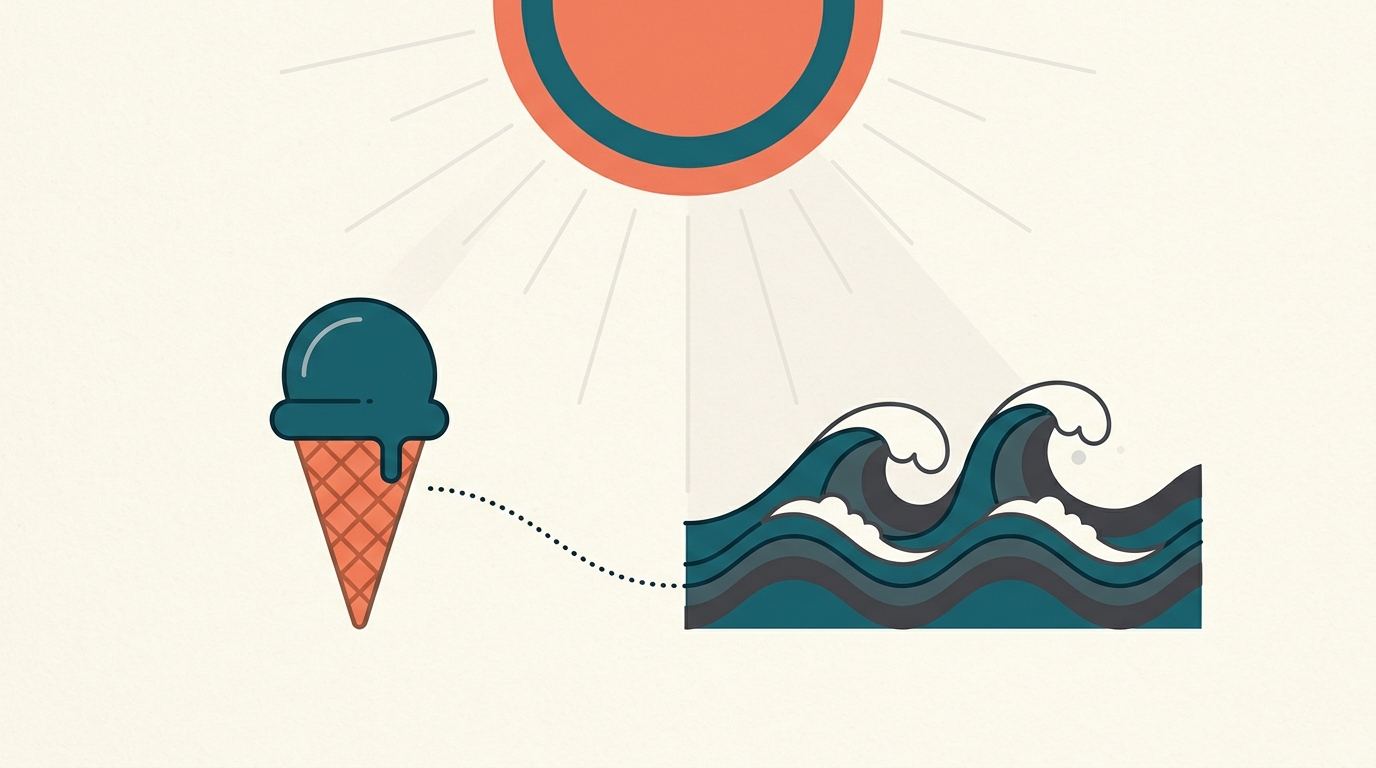
Imagine a seasonal chart where ice-cream sales and drownings rise together. Dessert looks suspicious, but the chart alone cannot show cause.
Related Comparisons
P-value vs confidence interval: what each one tells you
P-values and confidence intervals answer different questions. Use the p-value for evidence against a null model, and the interval for the size and uncertainty of the effect.
Mean vs median: which average should you use?
Mean and median are both measures of center, but the mean is pulled by extreme values while the median tracks the middle observation.
Relative risk vs absolute risk: the difference that changes decisions
Relative risk can make small changes sound large. Absolute risk puts the change back on a real scale, such as 2 in 100 becoming 3 in 100.
Standard error vs standard deviation: spread vs precision
Standard deviation is about variability in the data. Standard error is about variability in an estimate across repeated samples.