Collection
Probability Paradoxes Explained
Counterintuitive probability problems where the setup matters more than the first instinct.
Probability paradoxes are useful because they reveal the hidden question. Are you counting one person or every pair? Did new information change the sample space? Are you confusing the chance of evidence with the chance of innocence?
This collection links the classic examples to the reusable mental models behind them: pairwise comparisons, conditional probability, base rates, independence, and sampling bias. Each paradox is a warning that probability is not only about arithmetic. It is also about defining the event correctly.
Read these pages as a toolkit. The same mistakes appear in medical tests, courtroom evidence, games, friendship networks, and hospital samples. The details change, but the mental move is often the same: slow down and ask what population, event, or condition is actually being counted.
The first question: what is the sample space?
Many paradoxes vanish when the sample space is made explicit. In Monty Hall, the host's behavior changes what the remaining door means. In the birthday paradox, every pair of people creates a chance for a match. In prosecutor-style reasoning, the evidence is conditioned the wrong way around.
The second question: what was selected?
Friendship paradox, Simpson's paradox, and Berkson's paradox all show that the cases you see are not automatically neutral. A network, group mix, or selection gate can change the apparent probability. Before trusting a rate, ask how the observations entered the dataset.
Practice path
Start with the birthday paradox for pair counting, then Monty Hall for conditional probability, then base rates for rare events. After that, move to Simpson and Berkson to see how selection and aggregation can reverse the story. That order builds from clean games to messy real-world data.
Featured Facts
Probability
4 min · easy
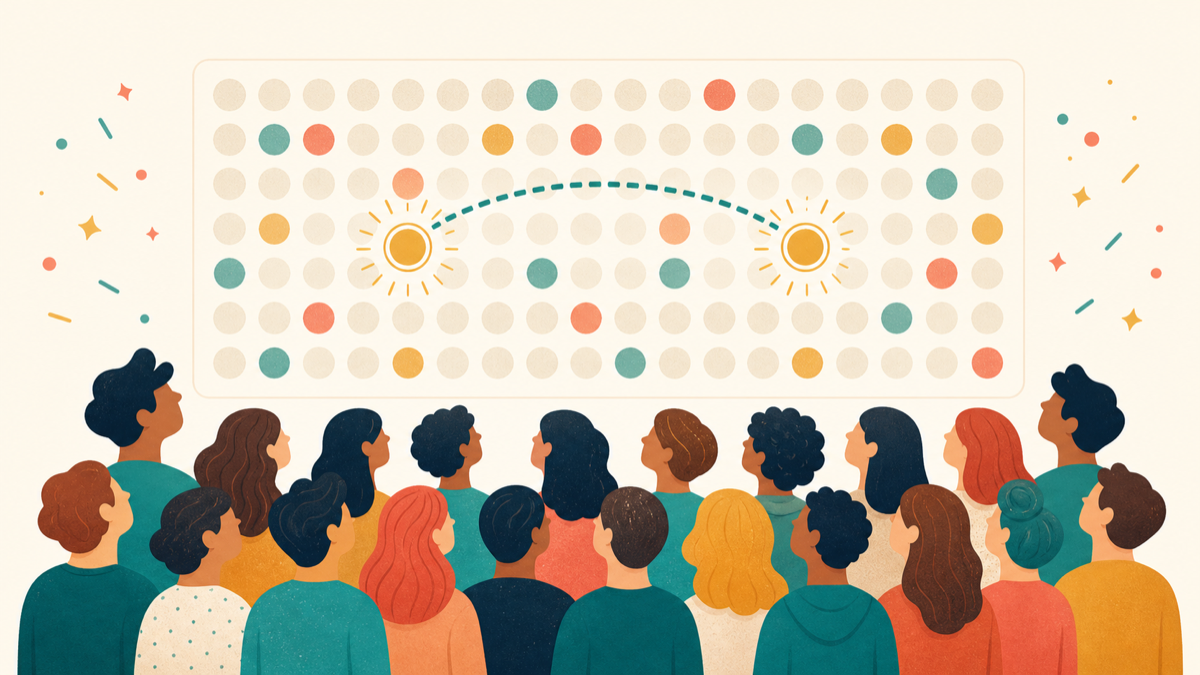
23 people are enough for a birthday match
A room with only 23 people is already more likely than not to contain two people with the same birthday.
Paradoxes
4 min · easy
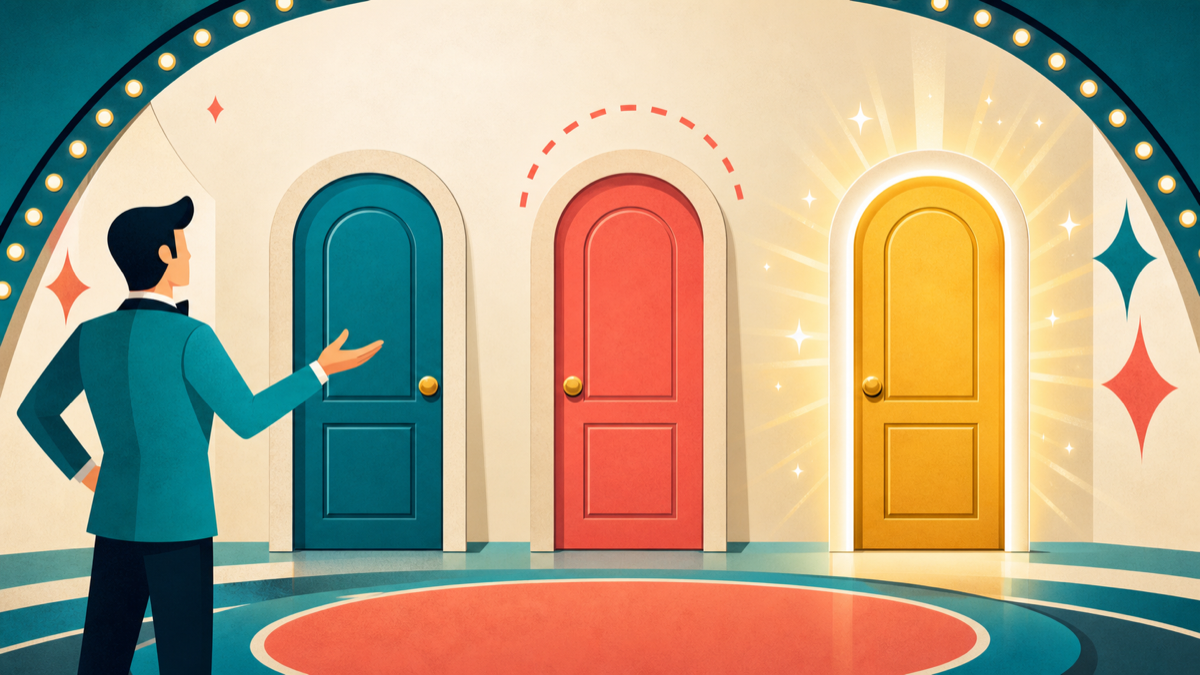
The door you did not pick is probably better
In Monty Hall, switching doors wins about twice as often as staying.
Risk & Decisions
4 min · medium
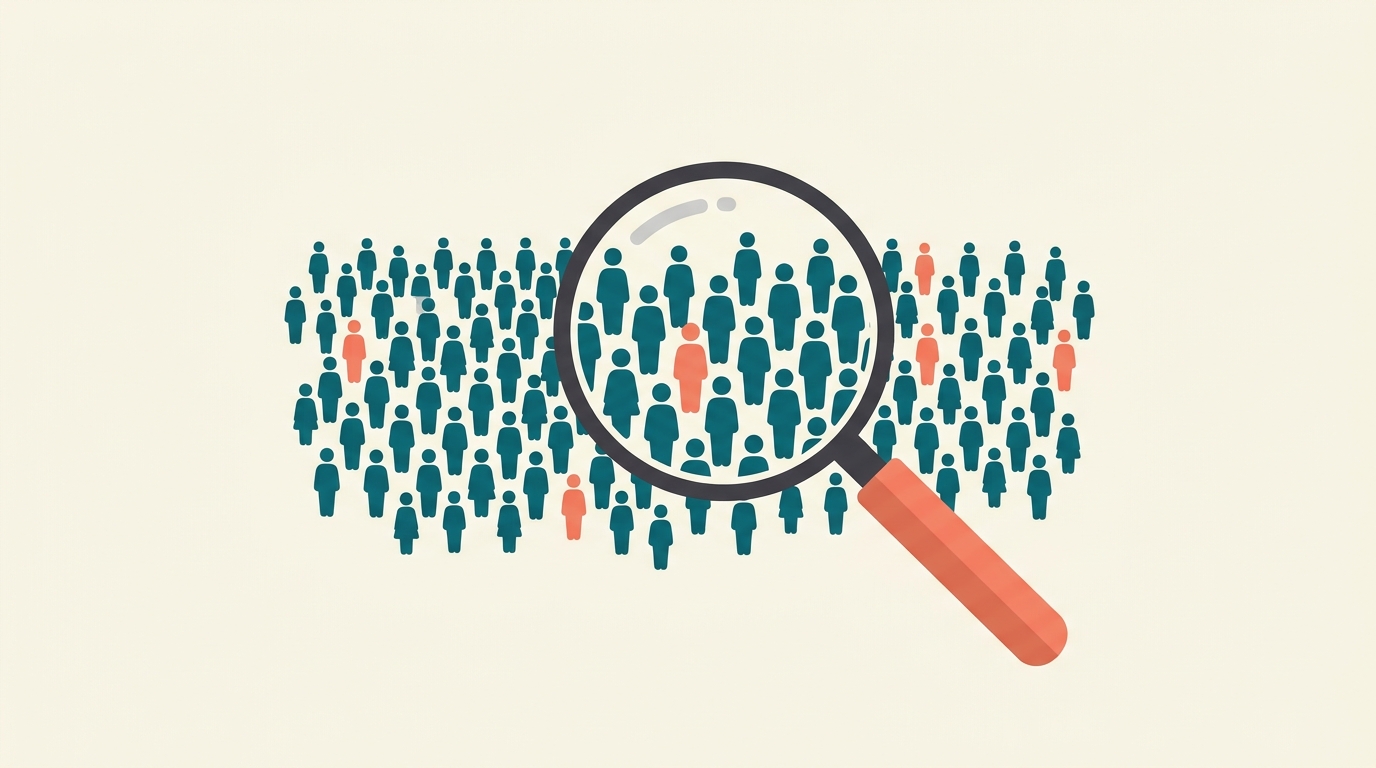
A good test can still scare too many people
When a condition is rare, most positive test results can still be false positives.
Risk & Decisions
4 min · medium
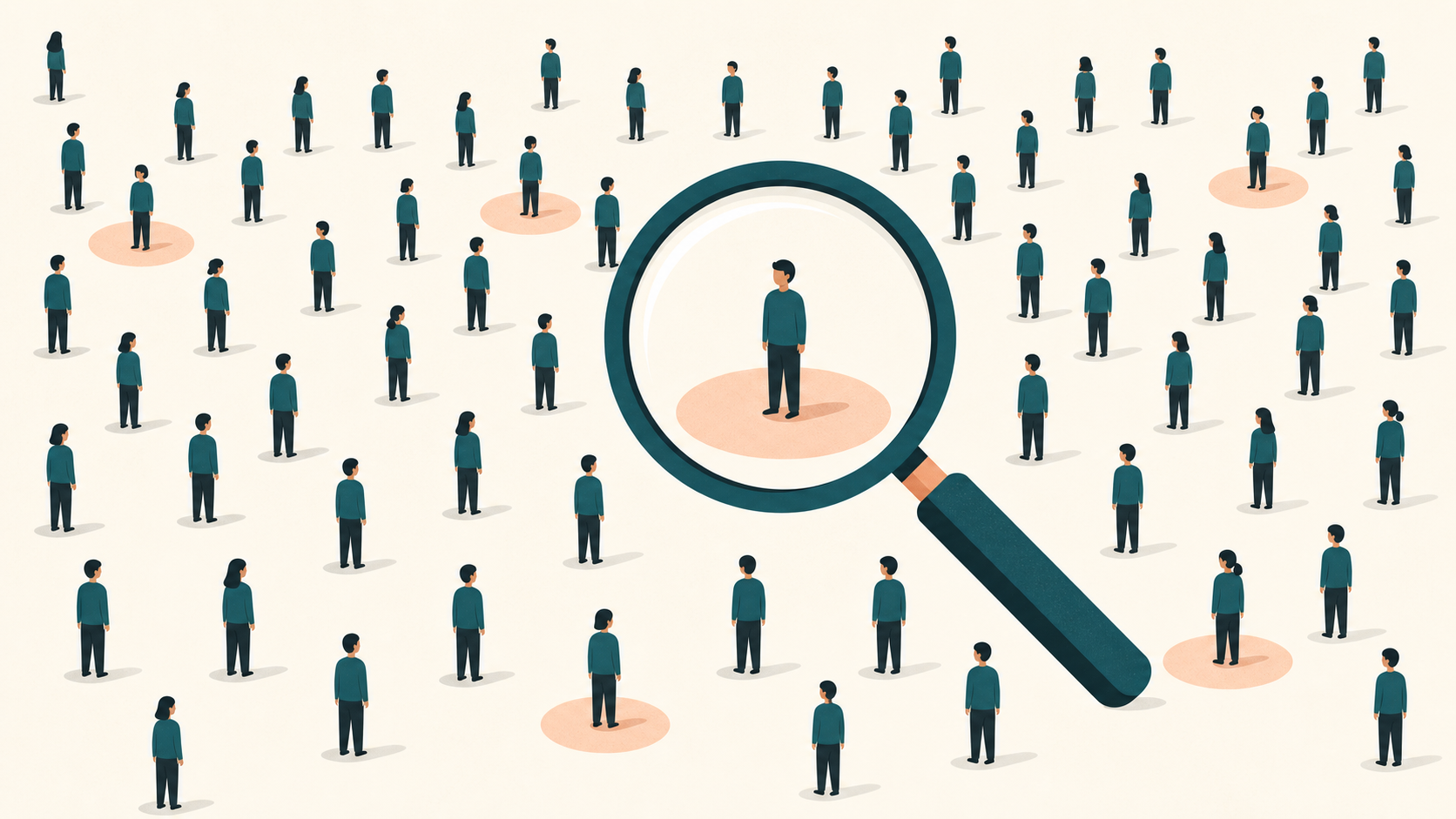
A one-in-a-million match is not a one-in-a-million chance of innocence
When a forensic trait matches 1 in a million people, a big enough population still holds many innocent matches — the match probability is not the probability of innocence.
Probability
4 min · easy
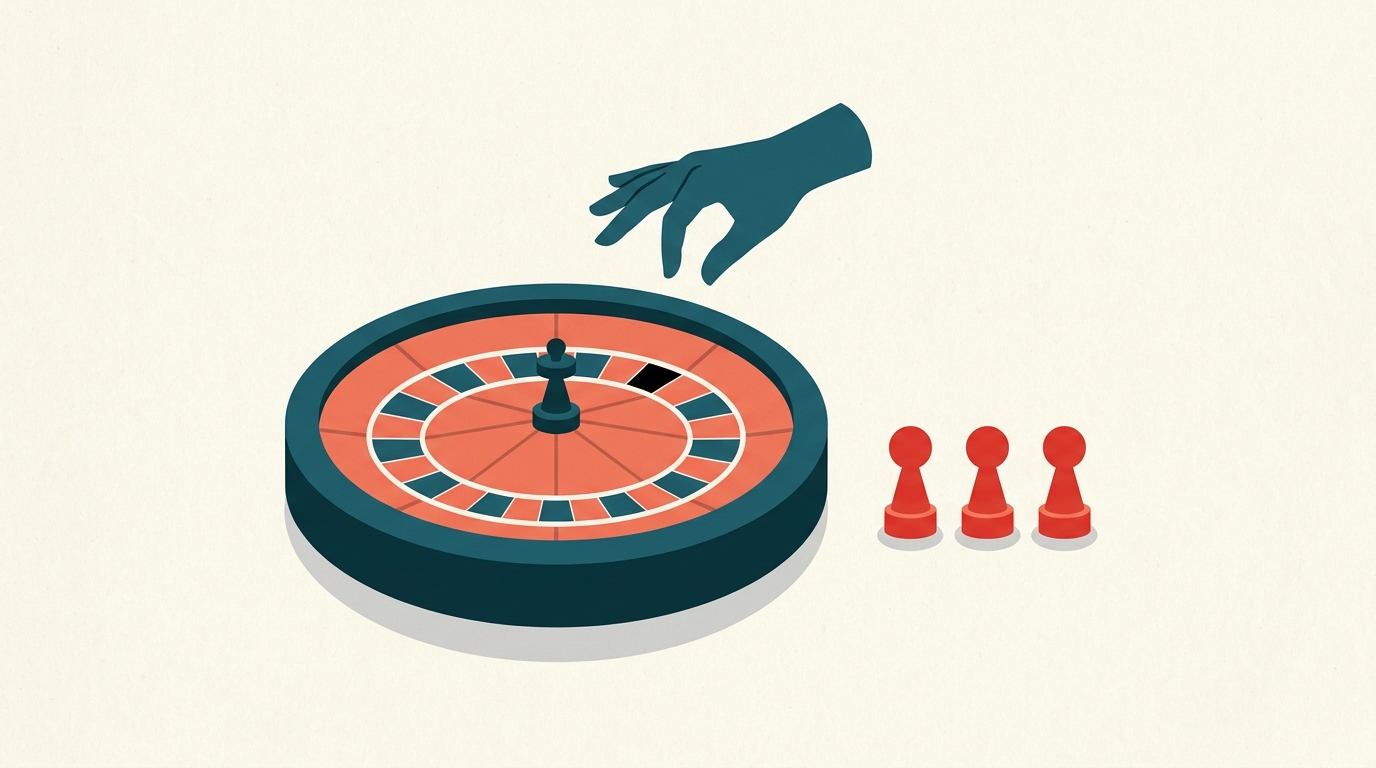
A roulette wheel has no memory
After red lands ten times in a row, black feels 'due'. The next spin is still about 48.6% red, exactly as it was on the first.
Paradoxes
4 min · medium
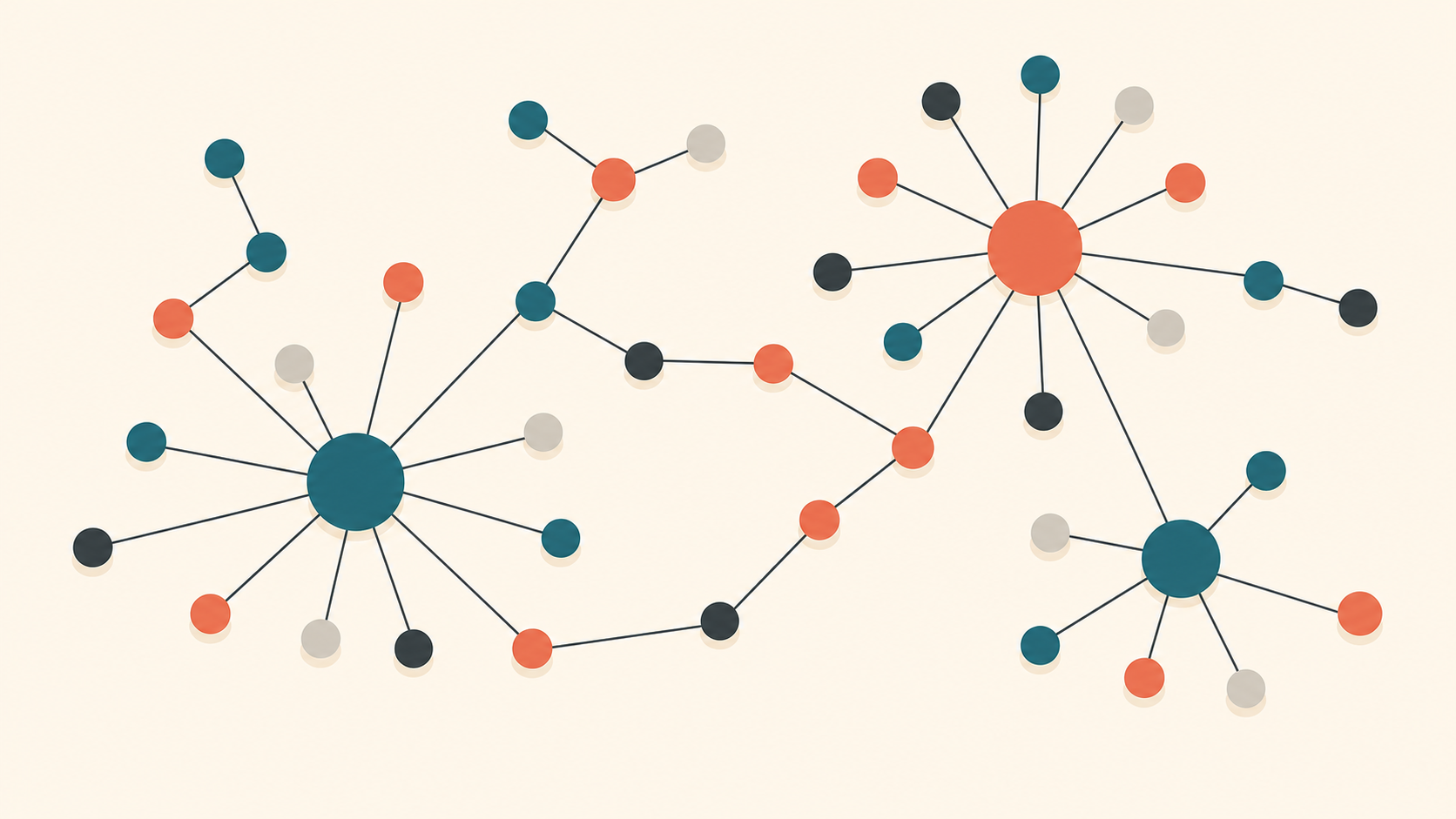
Why your friends seem more popular
Pool every name occurrence from every friend list and well-connected people appear more often. The resulting average is never below the uniformly random-person average, and is higher when friend counts vary.
Paradoxes
4 min · hard
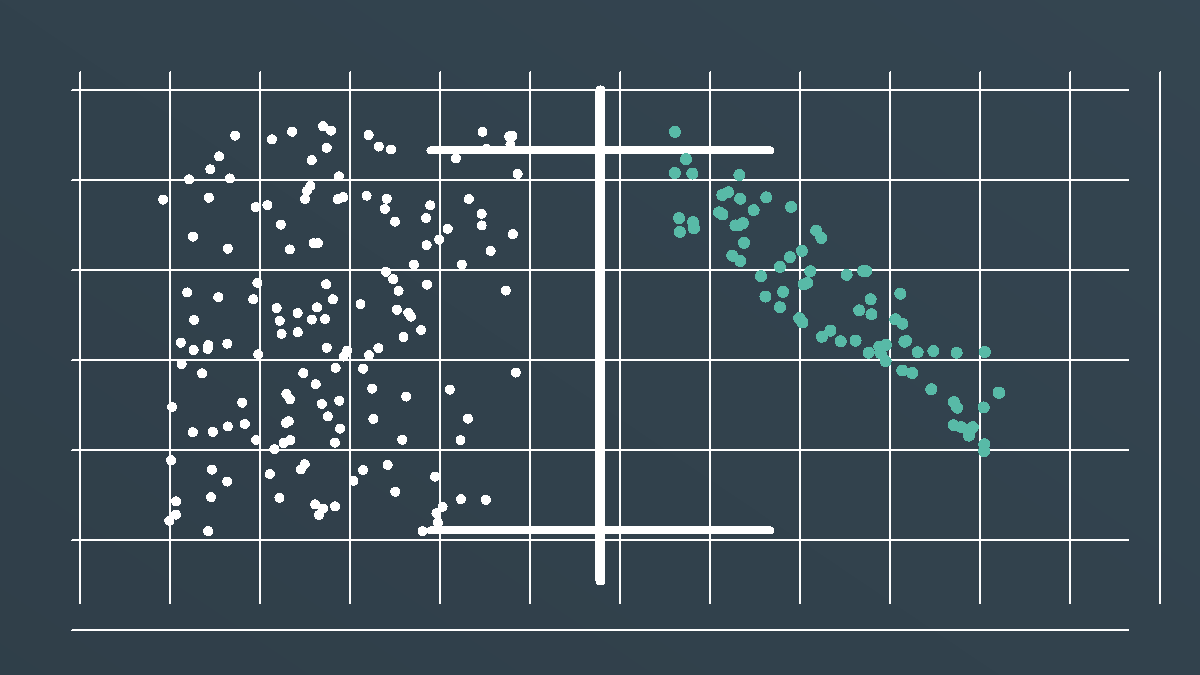
Berkson's paradox: hospitals can create fake correlations
Two unrelated risk factors can look negatively related inside a hospital, because either one can be the reason a patient got selected into the sample.
Paradoxes
4 min · medium
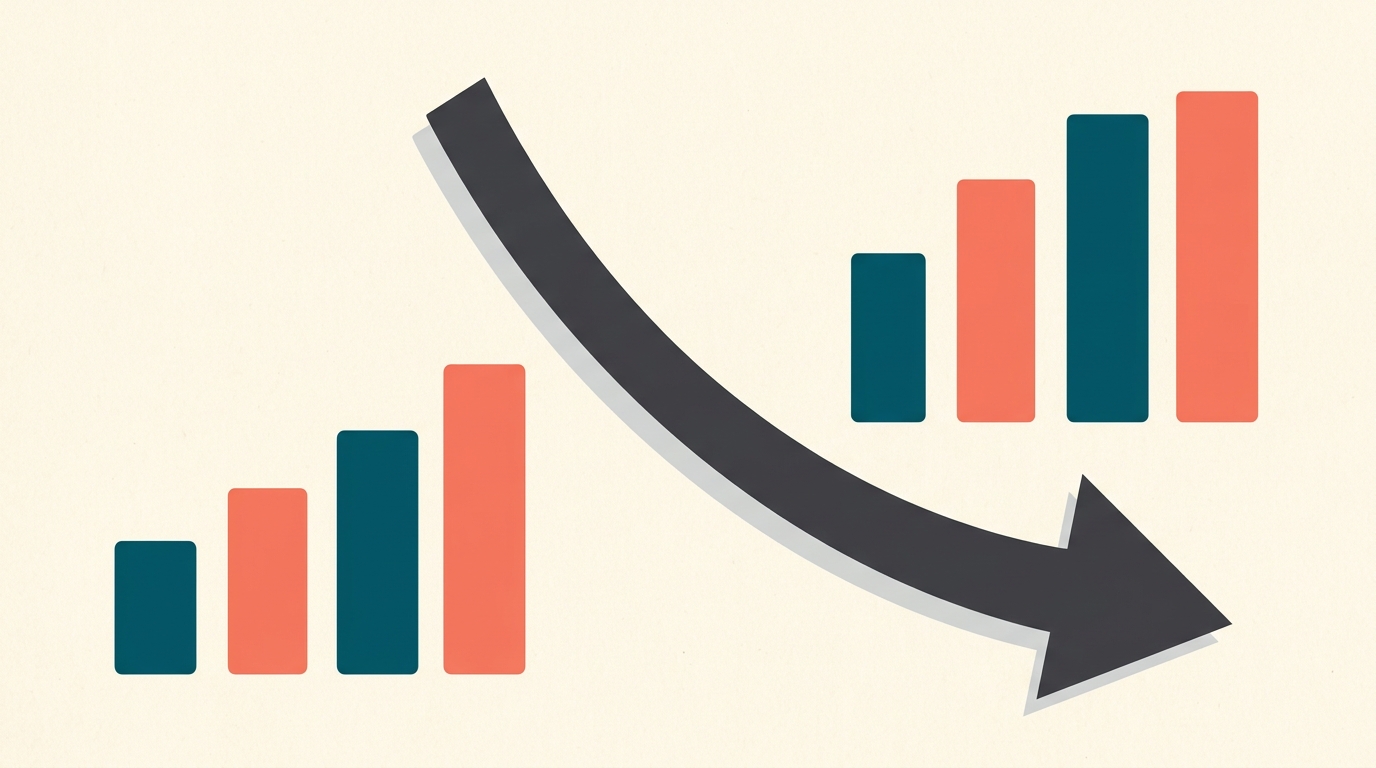
A trend can reverse when groups are combined
A treatment can look better in every subgroup but worse overall.
Psychology of Numbers
4 min · medium
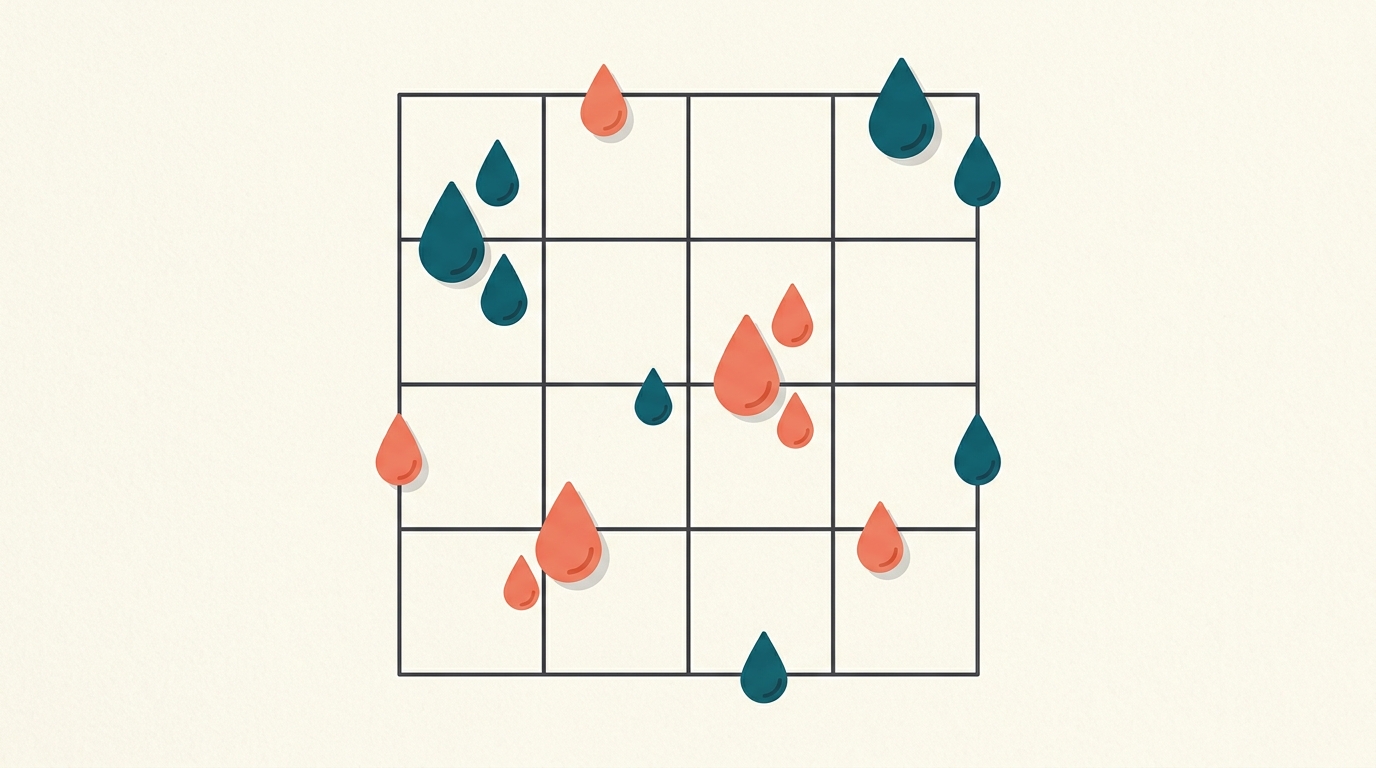
Randomness clumps more than you think
Scatter 100 raindrops across 100 tiles at random and about 37 tiles stay completely dry — while others catch two or three. Real randomness clusters.
Lessons
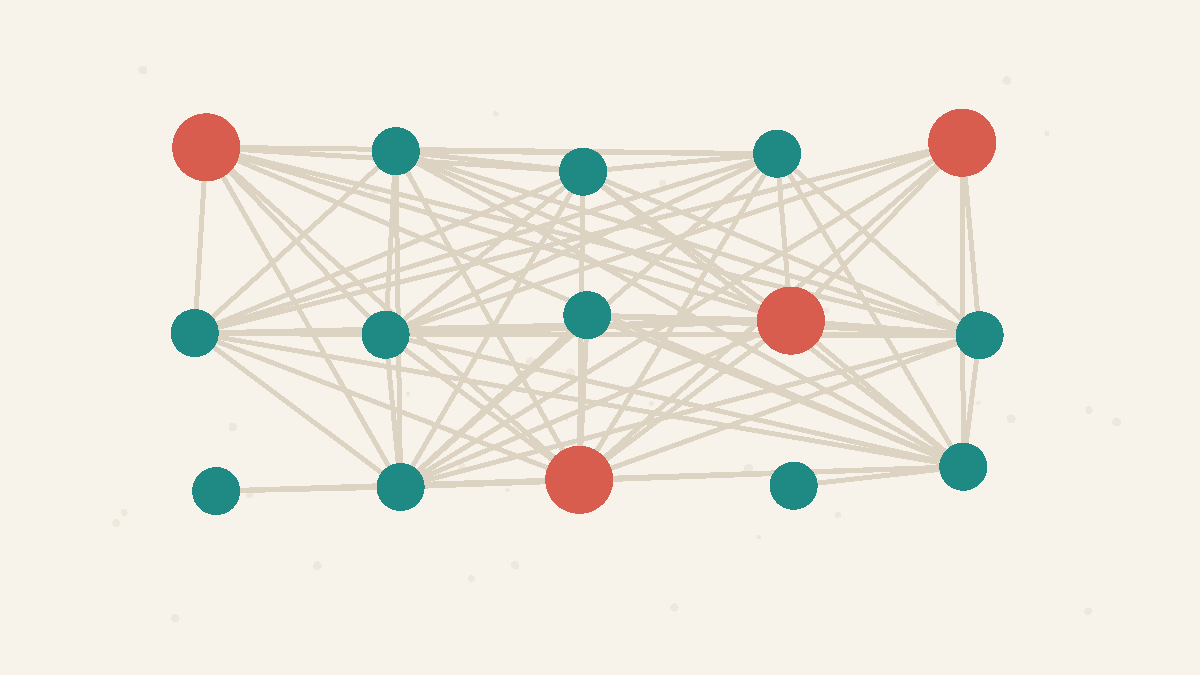
Collisions Grow Faster Than Intuition
The number of possible pairs grows roughly with the square of the group size.
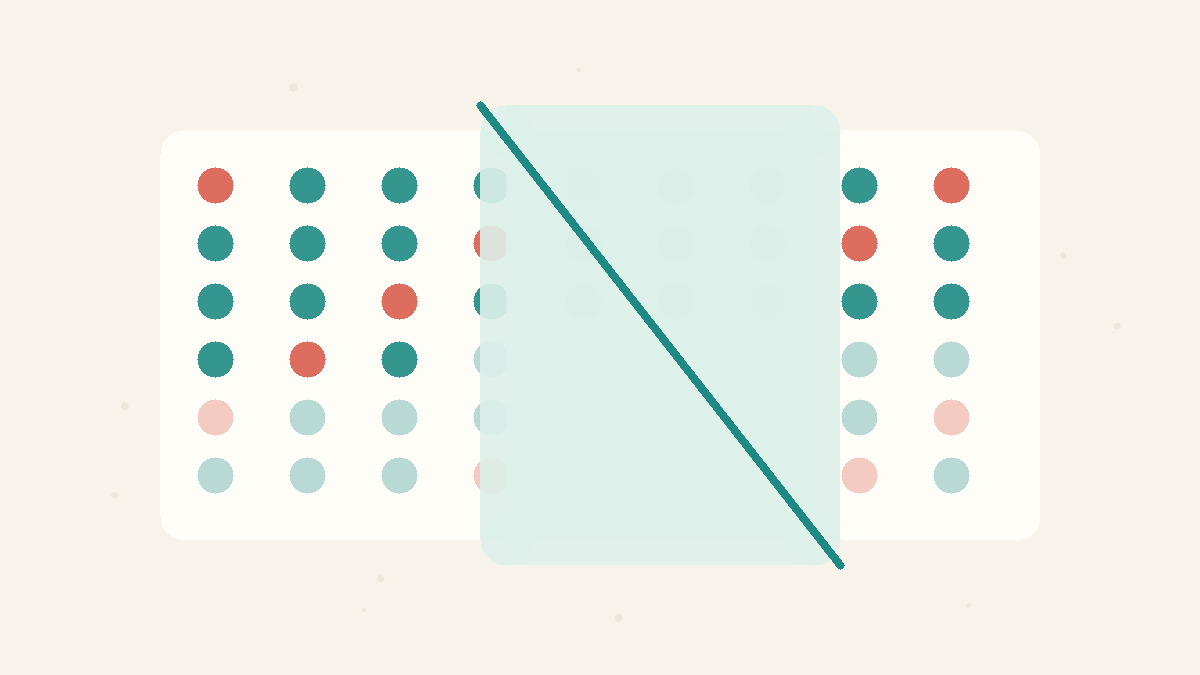
New Information Changes the Odds
Conditional probability is about updating the sample space after you learn something.
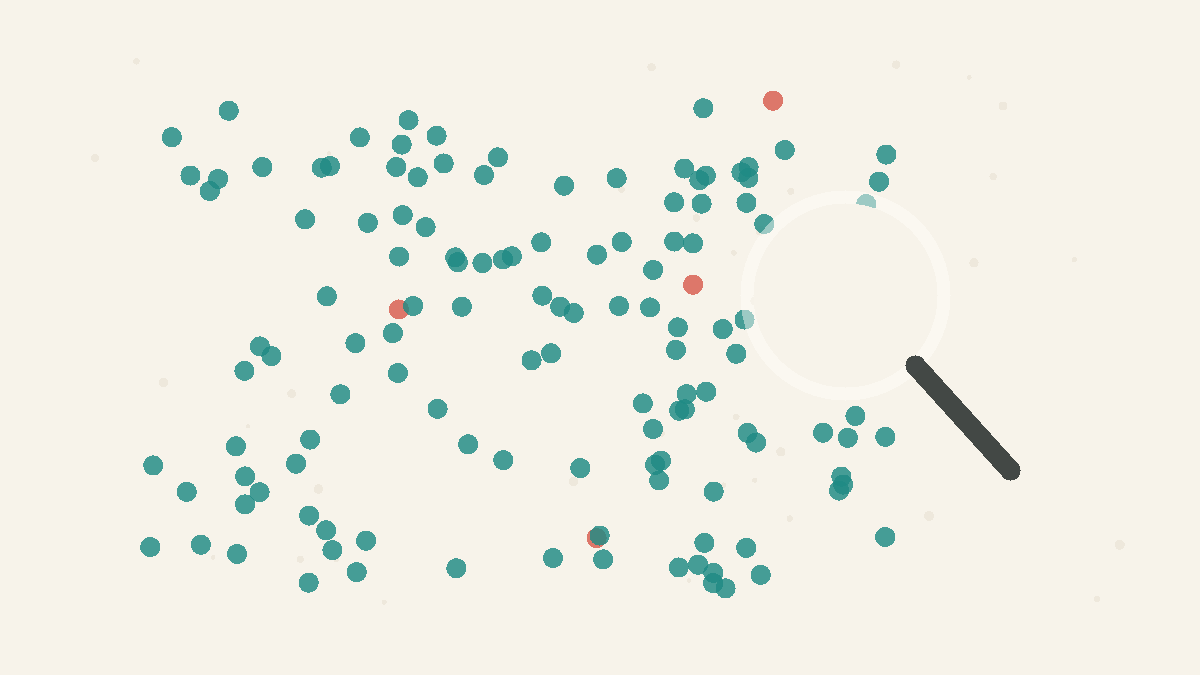
Rare Things Stay Rare
Even strong evidence can mislead when the thing you are testing for is very uncommon.
Chance Has No Memory
Past results don't change the odds of an independent event.
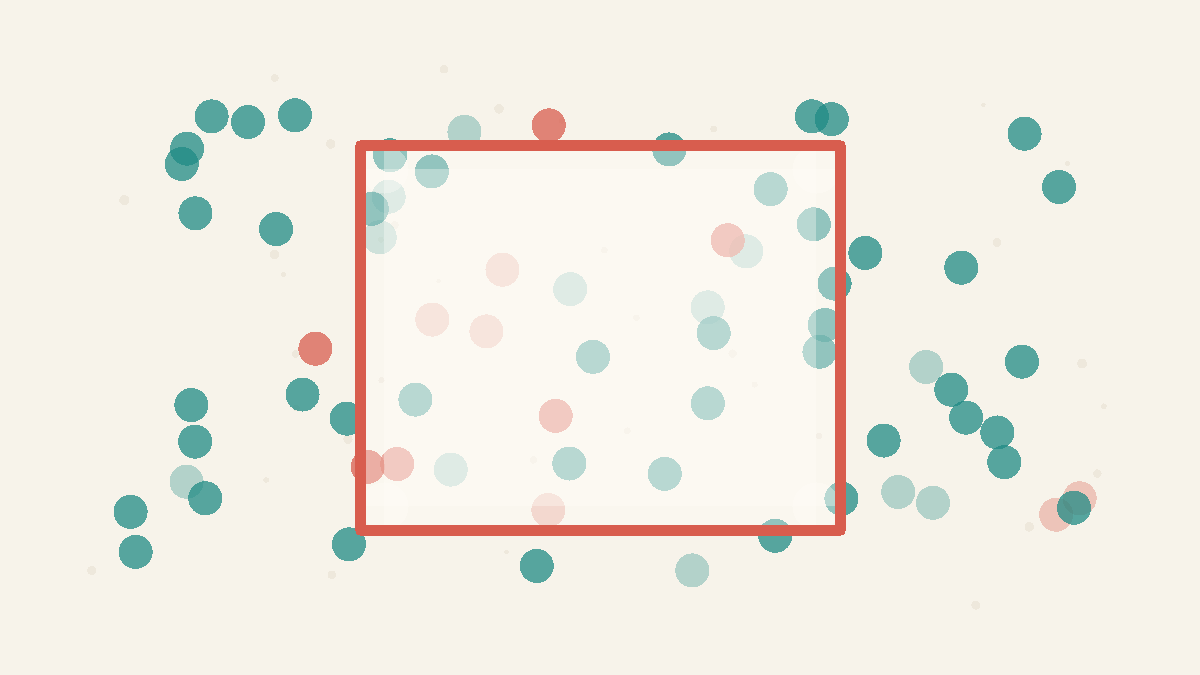
The Sample You See Matters
Your conclusion can be wrong when the data you see excludes important missing cases.
Concepts
Pairwise Comparisons
When every item can be compared with every other item, the number of possible pairs grows much faster than the number of items. A group of n items has n x (n - 1) / 2 pairs, so each new item connects to everything already there. This is why coincidences become common before any single comparison feels likely.
Conditional Probability
The probability of something after new information changes what is still possible. The important move is to update the denominator: cases ruled out by the new information should no longer be counted. Many mistakes happen when people keep using the original odds after the situation has narrowed.
Base Rates
The background frequency of something before you consider new evidence. A strong signal can still produce many false alarms when the thing being tested for is rare, because there are many more non-cases than cases. Good reasoning combines the new signal with the base rate.
Independence
Independent events do not influence each other: the probability of the next outcome is the same no matter what came before. A coin, a die, and a roulette wheel have no memory of their past results.
Sampling Bias
A distorted result caused by looking at data that does not represent the population you care about. More data does not fix the problem if the same kinds of cases are still missing. Before trusting a conclusion, ask who had a chance to appear in the sample and who was left out.